Luxury Travel Gear USA: A Professional Guide to High-End Transit Assets
The modern landscape of premium transit is defined not by the conspicuous display of wealth but by the seamless integration of engineering, utility, and refined aesthetics. For the seasoned traveler, the equipment used during transit functions as a mobile infrastructure, an extension of one’s personal workspace and domestic comforts. The shift in recent years has moved away from the “status symbol” model of luggage, often heavy, ornate, and structurally vulnerable, toward a philosophy of “quiet performance.” In this context, the value of travel equipment is measured by its ability to resolve the frictions of movement while maintaining a standard of construction that withstands the rigors of global aviation. Engaging with the market for high-end transit assets requires an analytical detachment from marketing-driven narratives. This is not merely an acquisition of goods; it is an investment in the operational continuity of one’s professional and personal life.
This examination provides a framework for identifying and maintaining assets that define the apex of the market. It deconstructs the reliance on superficial branding and steers the reader toward an objective assessment of durability, repairability, and ergonomic efficiency. By understanding the systemic demands of modern travel, one can curate a suite of tools that facilitates, rather than complicates, the act of relocation.
Understanding “luxury travel gear usa.”
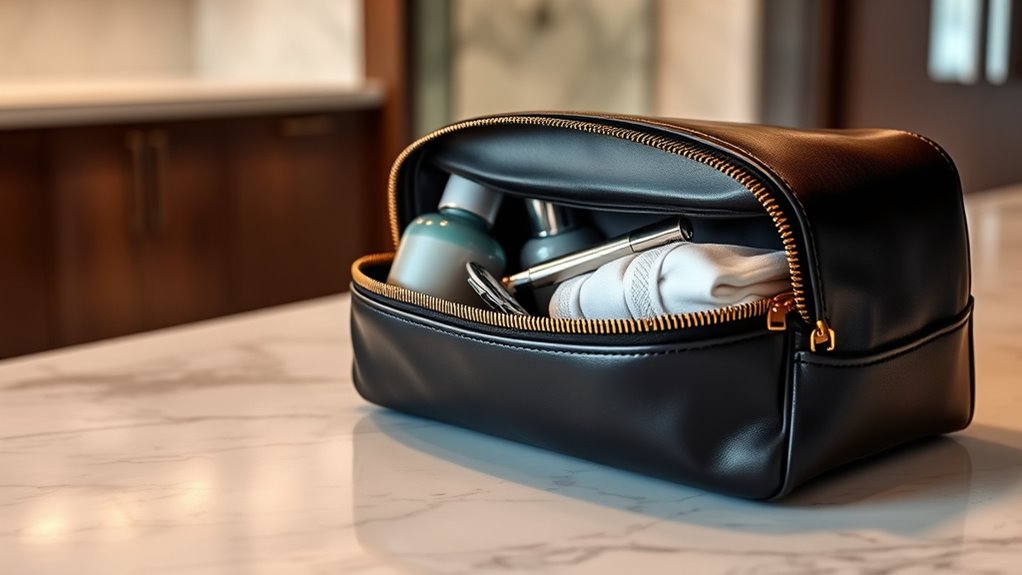
This is a profound error in taxonomy. In the professional transit market, luxury travel gear USA refers to an ecosystem of products designed with a specific focus on longevity, modularity, and technical performance. The misunderstanding arises because the broader retail market conflates “luxury” with “designer,” leading consumers to invest in aesthetic vessels that often lack the structural integrity required for frequent transit. A discerning analysis of luxury travel gear USA focuses on the “cost-per-trip” metric,c the total investment divided by the number of successful, incident-free transits.
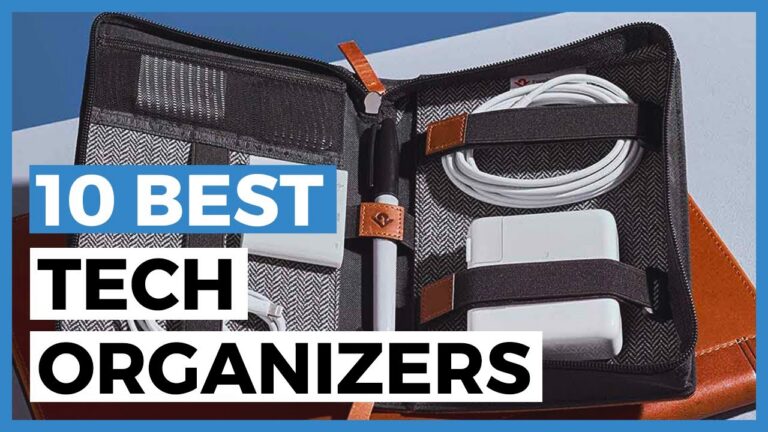
Furthermore, luxury travel gear USA encompasses more than just suitcases. It includes the entire secondary layer of equipment: tech organizers, high-fidelity transit apparel, and specialized protective enclosures for professional equipment. A common failure in this space is the “misaligned acquisition,” where a traveler purchases a top-tier suitcase but couples it with inferior, low-durability accessories. True luxury travel gear USA is holistic; it is a unified system where every component serves a defined role, from the compression of clothing to the protection of power management units. The goal is to reach a state of “zero-friction” movement, where the equipment disappears into the background of the travel experience.
Finally, navigating luxury travel gear in the USA requires an understanding of the North American service environment. Many brands operating in this segment offer “lifetime” guarantees, yet the real luxury lies in the accessibility of that service. Does the brand have a robust domestic repair network? The most sophisticated travelers view luxury travel gear USA not as a static purchase, but as an ongoing service relationship. By prioritizing brands that offer institutional support, the traveler secures the long-term utility of their assets against the inevitable wear of a life in transit.
The Systemic Evolution of High-End Transit Assets
The history of premium transit gear in the United States reflects a broader transition in global mobility. During the early 20th century, the luxury of travel was defined by weight and manual assistance, as massive steamer trunks were handled by an army of porters. As the mid-century aviation boom shifted the paradigm toward speed and independence, the “trolley” era emerged, introducing wheels and lighter synthetic materials. Today, we are in the “integrated” era, where the sophistication of the gear is judged by its weight-to-strength ratio and its ability to integrate with the digital requirements of the modern traveler. This evolution has favored engineering firms and technical apparel manufacturers over traditional fashion houses, marking a clear pivot toward functional minimalism.
Conceptual Frameworks for Asset Curation
1. The Modular Resilience Model
This framework categorizes assets by their “point-of-failure.” Assets that allow for the modular replacement of internal components (e.g., swappable wheels or replaceable handle grips) are inherently more valuable than monolithic units that require full replacement upon the failure of a single feature.
2. The Operational Friction Index
Every item is assessed by the amount of physical or cognitive effort it requires to deploy. High-end gear should have a near-zero friction index, meaning its usage is intuitive, its weight is optimized, and its organization is logical.
3. The Lifecycle Stewardship Framework
This model views equipment as a multi-generational asset. It mandates that every purchase must pass a “repair-ability audit” before acquisition. If an asset cannot be serviced, it is treated as a consumable rather than a luxury investment.
Categorizing Mobility Assets: Trade-offs and Decision Logic
| Asset Class | Primary Advantage | Trade-off | Strategy |
| Aerospace Aluminum | Exceptional structural rigidity | Susceptible to cosmetic “patina.” | For professional/fragile cargo |
| Technical Polycarbonate | Weight-to-durability balance | Susceptible to cracking under extreme impact | For general, multi-purpose travel |
| Ballistic Nylon (Soft-side) | Versatile packing capacity | Difficult to clean; aesthetic wear | For high-frequency, urban transit |
Decision Logic: When selecting between materials, analyze the primary travel environment. For airport-to-hotel business travel, the structural integrity of aluminum is superior. For multi-modal journeys involving trains or unconventional transit, the flexibility of high-denier nylon is more practical.
Real-World Scenario Analysis
The Multi-Leg Professional Transit
A consultant traveling three weeks a month across varying climates.
-
Decision: High-grade polycarbonate with a modular, field-serviceable wheel system.
-
Failure Mode: Overpacking leading to zip failure.
-
Correction: Integrating a separate, high-density compression internal system to ensure the shell is never under internal stress.
The Technical Equipment Deployment
A creative professional transporting camera hardware.
-
Decision: Specialized, foam-lined hard-shell cases with custom-fitted interiors.
-
Failure Mode: Weight exceeding airline carry-on limits.
-
Second-Order Effect: Forced gate-checking and potential impact damage.
-
Correction: Splitting the load into a smaller, certified transit case with secondary padding.
Cost Dynamics and Long-Term Resource Allocation
The economic reality of luxury transit gear is a trade-off between high upfront costs and a low “Total Cost of Ownership” (TCO).
| Timeframe | Cost Dynamics | Resource Focus |
| 0–2 Years | High acquisition cost | Initial warranty registration/maintenance |
| 2–5 Years | Minimal operational cost | Regular inspection and cleaning |
| 5–10 Years | Potential repair costs | Component replacement/Refurbishment |
True value is realized after the five-year mark, where the equipment remains functional while lower-tier alternatives would have required three to four full replacements.
Tactical Tools and Support Systems
-
Field Repair Kits: A set of specialized tools (e.g., custom screwdrivers for wheel replacement) provided by the manufacturer.
-
Tracking Infrastructure: Integration with reliable, global location-tracking services to mitigate the risk of loss in high-volume transit hubs.
-
Standardized Modular Inserts: Utilizing a single system of packing cubes that are consistent across all bags in the inventory.
-
Environmental Shielding: High-quality, collapsible covers to protect exterior finishes during severe weather or rough handling.
Risk Landscape and Failure Modes
-
Systemic Obsolescence: When a brand updates its design, rendering older parts incompatible.
-
The “Luxury Fragility” Paradox: Where extremely high-end materials (like certain leathers) are poorly suited for the abrasive environment of an airport terminal.
-
Regulatory Friction: When advanced design features—such as integrated power banks—are restricted by changing aviation safety policies.
Governance and Long-Term Adaptation
Maintain a “Fleet Registry.” For the serious traveler, each bag is a tracked asset with a service history.
-
Review Cycle: Conduct a formal audit of all mobility assets every six months.
-
Trigger: If a component exhibits “stickiness” or mechanical irregularity, it enters the repair queue immediately.
-
Adaptation: As travel needs change, such as shifting from international long-haul to short-haul regional transit, the fleet should be rotated or updated, rather than accumulated.
Evaluating Performance: Qualitative and Quantitative Signals
-
Ease-of-Transit Score: A qualitative assessment of how the bag moves through crowded transit corridors.
-
Internal Organization Efficiency: A quantitative measure of packing time; a well-designed system should require a predictable, fixed amount of time to pack and unpack.
-
Post-Transit Inspection: Documenting any new scuffs or structural impacts after each trip to identify repetitive stress points on the equipment.
Deconstructing Myths and Oversimplifications
-
Myth: “Luxury means the bag will never break.”
Correction: Complexity often invites failure. Luxury means the brand provides the infrastructure to resolve that failure effortlessly. -
Myth: “Everything must match.”
Correction: Matching sets are a logistical constraint. A “mixed-fleet” of specialized tools is the hallmark of the experienced traveler. -
Myth: “More expensive is always more durable.”
Correction: Often, extreme price is tied to branding, not material innovation. Verify specifications (e.g., polycarbonate grade) over price tags.
Ethical and Practical Considerations
The market for high-end goods is often prone to significant waste. Ethical stewardship involves prioritizing brands with clear “right-to-repair” policies and sustainable manufacturing footprints. The luxury of the experience is diminished if the procurement process contributes to planned obsolescence. Choosing a piece of equipment that is designed to be maintained is an act of consumer integrity that rewards both the user and the artisan.
Conclusion
The pursuit of high-end transit equipment is an exercise in functional refinement. It requires the traveler to move past the allure of the surface and engage with the substance of the design. By curating a fleet of assets based on repairability, material science, and ergonomic integration, one establishes a reliable infrastructure for a life in motion. The ultimate luxury is not the possession of a rare or expensive object, but the possession of a tool that performs its function flawlessly, trip after trip, without distraction or failure.