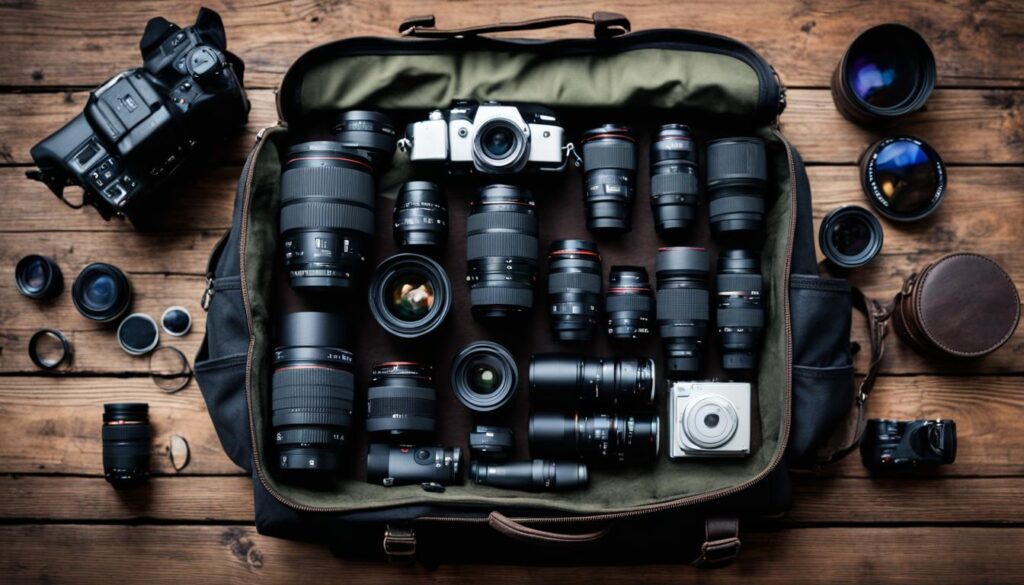
Photography Travel Gear Planning Tips: A Guide for the Professional
The professional photographer’s kit represents a precarious intersection of high-precision engineering and the chaotic, often unpredictable variables of the field. When planning for travel, the primary objective transcends simple acquisition of equipment; it demands a systematic reduction of logistical friction. The modern visual storyteller is tasked with navigating the competing requirements of image quality, operational reliability, and physical mobility, all while adhering to the increasingly restrictive constraints of global transit.
Achieving this level of mastery is not found in the purchase of the latest camera body, but in the meticulous planning of one’s support systems. The difference between a successful, efficient expedition and one defined by equipment failure or missed opportunity is often decided weeks before the departure, in the deliberate curation of cables, batteries, storage protocols, and protective housing. This analysis is designed for the practitioner who recognizes that their camera is merely the centerpiece of a much larger, complex operational system.
The following discourse provides a technical framework for evaluating and maintaining a field-ready photography kit. It is intended for those who treat their equipment as high-value assets requiring a disciplined approach to maintenance, protection, and long-term evolutionary planning, ensuring that the technology always serves the creative intent without becoming an impediment.
Understanding “photography travel gear planning tips.”
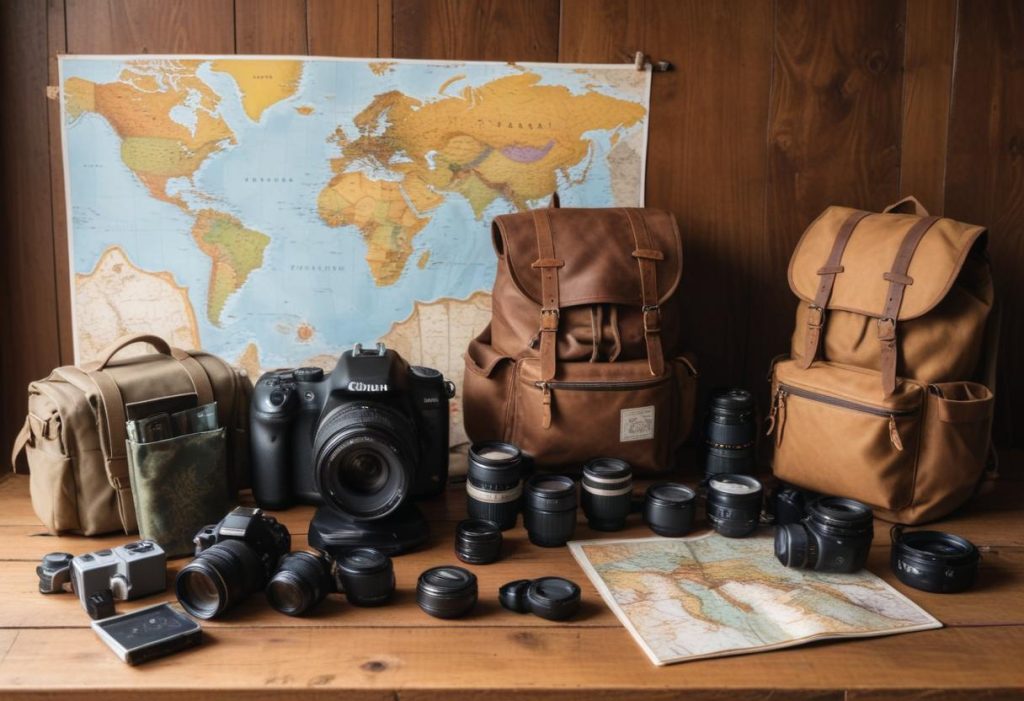
The search for photography travel gear planning tips often leads to generic checklists that conflate hobbyist requirements with professional operational needs. A true understanding of the field requires an analytical pivot from “what gear do I want?” to “what gear can I justify based on the specific constraints of my assignment?” The most dangerous misconception is the assumption that more is inherently better, a belief that invariably leads to weight-driven fatigue and, eventually, a total failure of the transit system.
Oversimplification, especially in the context of high-stakes photography, introduces unnecessary fragility. When a photographer ignores the systemic integration of their gear, such as ensuring power compatibility across different voltage standards or validating the backup protocols for data, the equipment becomes a liability. Effective photography travel gear planning tips focus on the elimination of variables that introduce risk. Whether one is navigating the grit of a desert environment or the moisture-saturated air of an alpine forest, the gear must be selected not for its theoretical performance, but for its capacity to function reliably under the specific conditions of the environment.
Deep Contextual Background: The Evolution of Field Systems
The trajectory of field photography hardware has moved away from the monolithic, heavy systems of the film era toward a lean, mirrorless infrastructure that prioritizes high-speed data transmission and extreme portability. Historically, the field photographer was burdened by the physical necessity of large-format glass and massive stockpiles of chemical media. The current evolution toward integrated digital ecosystems allows for smaller, more efficient kits. However, this shift has introduced new failure modes, particularly concerning battery dependency, data security, and the precision of electronic interfaces, necessitating a more rigorous approach to system stewardship.
Conceptual Frameworks and Mental Models
-
The Critical Failure Threshold: Map every component in the kit based on its criticality to the assignment. If the failure of an item (e.g., a memory card) cannot be mitigated by local procurement or redundancy, it must be subject to a “dual-tier” backup policy.
-
The Energy Equilibrium: Calculate the total power consumption of the kit—including camera, laptop, and drones—against the recharge cycles available in the field. Every watt-hour must be accounted for to ensure operational continuity.
-
The Modularity Constraint: Prioritize gear that fits into a standard, carry-on-compliant framework. Any equipment that necessitates checked baggage adds an unacceptable layer of risk and logistical friction.
-
The Environmental Sensitivity Index: Adjust gear selection based on the specific abrasive or moisture-heavy nature of the destination. A “top-rated” lens might be an operational failure in a high-humidity zone if its internal seals are inadequate.
Key Categories and Operational Variations
| Category | Performance Metric | Primary Trade-off |
| Primary Body | Dynamic Range/Speed | Weight/Thermal load |
| High-Precision Glass | Optical Resolution | Size/Weight/Aperture speed |
| Data Redundancy | Read/Write Throughput | Physical volume/Risk of loss |
| Field Support | Stability/Torsion Control | Weight/Setup time |
Decisions regarding these categories must be made through a “mission-first” lens. If the objective is street photography, weight and setup time (the “friction” of the system) must be minimized; if the objective is landscape photography, structural stability and precision become the dominant requirements.
Detailed Real-World Operational Scenarios
-
The Expeditionary Landscape: The constraint is distance and altitude. The photographer must balance the weight of full-frame glass against the necessity of high-resolution output. Failure mode: physical exhaustion due to an imbalanced loadout.
-
The Documentary/Journalistic Project: The constraint is rapid, low-light accessibility. The system must permit instant deployment without complex settings. Failure mode: missing the decisive moment due to “gear complexity.”
-
The High-Altitude/High-Cold Assignment: The constraint is battery chemistry and structural embrittlement. All gear must be tested for low-temperature operational failure, and the kit must include redundant thermal-resistant power sources.
Planning, Cost, and Resource Dynamics
The total investment in professional gear includes not just the purchase price, but the recurring cost of maintenance and the potential financial impact of downtime.
| Investment Resource | Cost Range | Strategic ROI / Risk Mitigation |
| Professional Body | $2,000–$6,500 | Operational reliability |
| Redundant Storage | $500–$1,500 | Data safety; loss prevention |
| Support/Tripod | $400–$1,200 | Image consistency/Precision |
Opportunity cost should be factored into every decision. A cheaper, unbranded tripod may save $500 initially but lead to an image failure that costs thousands in lost potential revenue or wasted travel expenses.
Tools, Strategies, and Support Systems
-
Offline Inventory Management: Maintain a precise database of all serial numbers, purchase dates, and current condition of every item.
-
Redundant Power Protocol: Standardize charging on USB,-C where possible,ble to consolidate your cable kit and enable universal charging across devices.
-
Field-Grade Cleaning: Pack a minimal, high-quality optical cleaning kit. Grit is the primary cause of internal lens damage; managing it is a prerequisite for long-term gear survival.
-
Hard-Drive Protocol: Use a tiered storage strategy: active shooting on high-speed cards, daily offload to redundant portable SSDs, and, if possible, cloud sync when connectivity allows.
Risk Landscape and Failure Modes
-
Data Corruption: The “silent” failure mode. Always assume your primary storage will fail; mitigate by writing to dual cards simultaneously.
-
Sensor Contamination: Changing lenses in field conditions is a high-risk event. Use a structured, wind-shielded process to manage this.
-
Thermal Management: Modern cameras generate significant heat during sustained 4K/8K recording. If your bag does not allow for dissipation, the electronics will degrade prematurely.
-
Theft and Security: In urban transit environments, gear is a target. Use non-descript, professional-grade bags rather than those marketed as “photography bags.”
Governance, Maintenance, and Long-Term Adaptation
View your gear as an evolving, high-performance system.
-
The Post-Assignment Audit: After every trip, perform a deep cleaning and functional audit of the entire kit.
-
Lifecycle Monitoring: Track shutter actuations and battery health cycles. Proactively retire batteries after two years of heavy use to avoid capacity failure mid-expedition.
-
Layered Checklist: Utilize a master inventory that is checked against every trip, categorized by “core,” “environment-specific,” and “contingency.”
Measurement, Tracking, and Evaluation
-
Qualitative Signal: Do you experience any hesitation or “cognitive load” when deploying your kit? Friction here is a signal of poor planning.
-
Quantitative Signal: The “Total Setup Time.” If you cannot be ready to capture in under 60 seconds, your organization’s system requires structural modification.
-
Documentation Example: An itemized ledger of maintenance dates, firmware updates, and any functional glitches encountered in the field.
Common Misconceptions and Oversimplifications
-
“One body does everything”: Reliable photography usually requires a backup body for critical projects.
-
“Bigger lenses are better”: Better lenses are those that provide the required reach and aperture for the specific project, not those with the highest diameter.
-
“Camera bags are for photography”: Often, the most secure bags for travel are nondescript laptop or hiking packs with internal modular protection.
-
“Software fixes hardware problems”: High-speed, high-resolution post-processing cannot fix an image that was captured with a compromised sensor or shaky support.
Conclusion
The successful execution of photography in remote or challenging environments is the result of disciplined, long-term planning. The photography travel gear planning tips provided here emphasize the necessity of treating your kit as an interconnected ecosystem, rather than a collection of independent tools. By prioritizing reliability, redundancy, and environmental adaptability, the photographer mitigates the inherent risks of travel and ensures that their focus remains fixed on the creative process. Mastery in this field is defined by the ability to manage the logistics of hardware with such precision that the gear becomes an invisible, yet indispensable, extension of the artistic intent.