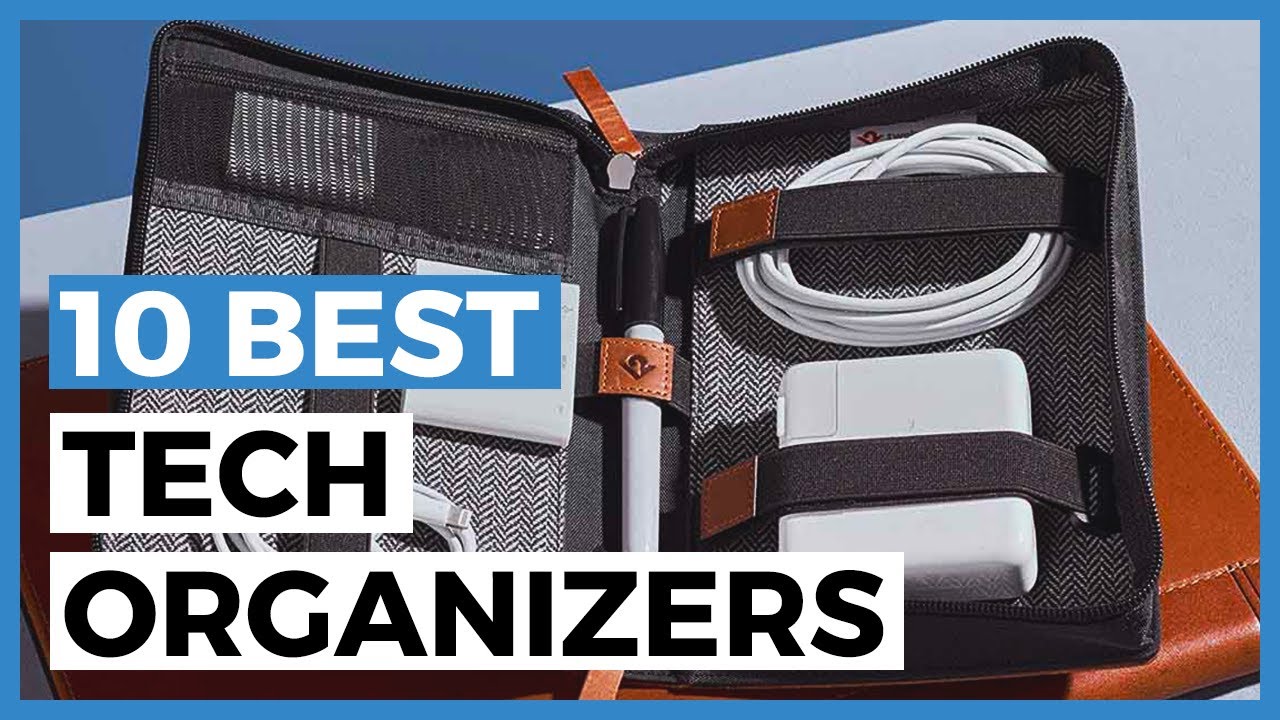
Best Tech Organisers United States: A Professional Guide to Workflow Efficiency
The modern digital workspace and the itinerant nature of contemporary professional life have elevated tech organisation from a minor convenience to a critical operational competency. As individuals increasingly rely on dense ecosystems of high-performance peripherals, power delivery systems, and data transmission cables, the physical management of these assets becomes a bottleneck for productivity. This transition reflects a broader shift toward “optimised portability,” where the ability to rapidly deploy, scale, and secure a professional tech suite is as vital as the hardware itself.
However, the discourse surrounding organisational tools is often clouded by consumer-grade aesthetics and feature-bloat, which obscure the structural requirements of professional-grade equipment management. True organisational efficacy is not found in the acquisition of more containers, but in the implementation of systems that provide resilience, accessibility, and modularity. For the professional navigating high-stakes environments, whether in a home office or on a flight, the goal is the minimisation of cognitive load and the maximisation of hardware reliability through disciplined storage.
This analysis examines the systemic approach to curating and maintaining a high-performance tech ecosystem. It is intended to serve as a definitive reference for those seeking to move beyond superficial tidying and toward a rigorous, long-term methodology for managing the digital tools of their trade.
Understanding “best tech organisers united states.”

The search for the best tech organizers united states often leads to a saturation of marketing-driven “best of” lists that prioritise visual appeal over engineering integrity. To understand what truly constitutes top-tier equipment, one must pivot from a product-centric view to a process-centric one. An organiser is fundamentally an interface between the user’s workflow and their physical assets; if that interface creates friction through poor ergonomics, low-quality materials, or rigid designs that resist change, it has failed its primary objective.
Common misunderstandings arise from the assumption that a singular “organiser” can address both static desktop environments and dynamic travel scenarios. In reality, these are distinct operational domains. The desktop requires cable concealment and static accessibility, whereas the travel context demands shock attenuation, compression, and rapid, low-light deployment capabilities. Over-simplification here leads to the “junk drawer” effect, where equipment is bundled rather than organised, resulting in damage to sensitive connectors and wasted time during critical moments of setup or teardown. Identifying the best tech organizers united states requires acknowledging that the “best” tool is the one that is specifically engineered for your unique friction points.
The Evolution of Hardware Stewardship
The trajectory of tech management has mirrored the advancement of consumer electronics. As device density has increased—with individuals now managing multiple high-wattage power bricks, specialised dongles, and high-speed data cables—the risks associated with poor organisation have transitioned from simple inconvenience to active risk. Frayed connectors and heat-trapping bundles are no longer minor issues; they represent legitimate failure points for expensive hardware.
Historically, the market responded with rudimentary plastic ties and basic pouches. Today, the landscape is occupied by specialised modular systems, abrasion-resistant materials like high-denier textiles, and architecturally designed pouches that prioritise structural integrity. This shift reflects a maturing user base that views tech gear not as disposable accessories, but as critical components of a business or creative workflow that require long-term protection and sophisticated lifecycle management.
Conceptual Frameworks and Mental Models
To effectively navigate the market for the best tech organizers united states, practitioners should employ these four mental models:
-
The Ecosystem Interdependency Model: View your tech as a connected network rather than isolated items. If a 100W GaN charger is the heart of your system, your organization must accommodate its thermal footprint and specific cable requirements. Organising by “type” (e.g., cables with cables) is less effective than organising by “intent” (e.g., power delivery group).
-
The Deployment Velocity Metric: Rank your gear based on how quickly you need it. High-velocity items (cables, primary power, mouse) should be stored in high-access zones; low-velocity items (backups, adapters, legacy cables) belong in deep storage.
-
The Minimalist Constraint: Apply the “Force Function” model. Choose an organiser that is slightly too small for your current kit. This creates a natural pressure to declutter and prevents the accumulation of redundant “just in case” accessories that lead to excessive weight and bulk.
-
Redundancy as Risk: Every backup cable stored is a weight penalty. Define the minimum set of dependencies required for your mission-critical tasks and standardise around that configuration, rather than keeping disorganised “spares” that add bulk and reduce organisation.
Key Categories and Organisational Variations
Defining the best tech organizers united states requires categorising gear by environmental need rather than just aesthetic design.
| Category | Best For | Key Design Metric | Potential Trade-off |
| Modular Pouch | Versatile EDC / Travel | Interior grid / Elasticity | Over-compartmentalization |
| Cable Folio | Static / Desk-heavy | Cable visibility / Flat profile | Bulkier for travel |
| Hard-Shell Case | Sensitive / Field Work | Impact / Crush resistance | Inflexible footprint |
| Cable Sleeve | Permanent Desk Setup | Heat dissipation / Routing | Difficult to reconfigure |
| Under-Desk Tray | Large Desktop Networks | Capacity / Weight limits | Mounting permanence |
The decision logic here is simple: if the system stays on a desk, prioritise cable routing and concealment. If the system moves, prioritise weight distribution and protection against kinetic damage (drops, compression in bags).
Detailed Real-World Operational Scenarios
-
The Hybrid Commuter: Requires a modular pouch with internal dividers that can transition between a messenger bag and a cafe table. The failure mode here is “spill-out”—an organiser that dumps its contents when opened.
-
The Field Photographer: Needs high-density storage for memory cards, batteries, and card readers. The priority is rapid, sequential access. The risk is environmental contamination, necessitating water-resistant, sealable pockets.
-
The Static Workstation: Focuses on the “back-of-desk” landscape. The failure mode is thermal buildup; bundling high-current power cables in tight sleeves without adequate ventilation can degrade insulation over time.
-
The Transatlantic Traveller: Requires extreme space efficiency. The constraint is weight and security screening access. The “best” kit here is a thin, flat folio that allows for TSA-compliant “grab-and-go” inspection.
Planning, Cost, and Resource Dynamics
The investment in an ech organisation is an investment in asset protection.
| Resource | Direct Cost Range | Indirect Value / ROI |
| Premium Pouch | $40–$100 | Prolonged cable life; reduced stress |
| Cable Routing System | $15–$60 | Professionalism; speed of setup |
| Modular Inserts | $10–$30 | Adaptability to changing hardware |
| Inventory Tracking | $0–$10/mo | Preventing redundant purchases |
The primary “hidden cost” is time. Every minute spent untangling cables or digging through a chaotic bag is a tax on your productivity. When assessing the best tech organizers united states, amortise the cost of the organiser over the 3–5 year lifespan of your cables; a $60 pouch that protects $500 worth of cables and chargers is a high-yield investment.
Tools, Strategies, and Support Systems
-
Digital Inventory Tracking: Utilise simple spreadsheets or databases to track your active hardware. This prevents “phantom purchasing” of redundant dongles and chargers.
-
Tension-Free Cable Loops: Use Velcro wraps rather than tight elastic bands. Tight loops cause micro-bends that damage internal copper strands over time.
-
Colour-Coded Labels: For complex networks, use physical labels near the connector head. This drastically reduces troubleshooting time during reconfiguration.
-
Silicone Ties: Prefer silicone over plastic; they are reusable, gentle on cable jackets, and don’t require adhesive removal.
-
Cable Pass-Throughs: In desk setups, ensure your routing path doesn’t put stress on the device’s own internal ports.
Risk Landscape and Failure Modes
-
Thermal Buildup: The most ignored risk. High-wattage chargers generate heat. If an organiser prevents airflow, you risk long-term degradation of internal electronic components.
-
Connector Snags: Poorly designed organisers with rough interiors or protruding zippers can catch and shear off delicate micro-connectors.
-
Adhesive Failure: In desk setups, cheap adhesive clips often fail after a few months of heat cycling. Always look for high-bond acrylic foam tape.
-
Micro-Bending: The subtle killer of high-speed data cables. Storing cables in circles smaller than 2 inches in diameter will, over time, introduce signal attenuation or complete connection failure.
Governance, Maintenance, and Long-Term Adaptation
Treat your tech organisation as an evolving system rather than a static setup.
-
Quarterly Audit: Every 90 days, remove all items from your primary tech pouch. If an item hasn’t been used in that period, relocate it to long-term storage or remove it from your EDC kit entirely.
-
Trigger Points for Adaptation: Re-evaluate your organisation when you change devices (e.g., switching from USB-A to USB-C charging) or when your mobility requirements shift (e.g., moving from a remote-first to a hybrid office model).
-
Layered Checklist:
-
Daily: Reset pouch contents to “base-layer” state.
-
Monthly: Inspect cables for physical abrasion or kinking.
-
Quarterly: Clean desk-bound organisers of dust and debris.
-
Measurement, Tracking, and Evaluation
You are succeeding if you have reached a “zero-search” state. If you know exactly where your gear is, and you can deploy your full suite in under 60 seconds, your system is optimised.
-
Qualitative Signal: Do you feel a “cognitive friction” when you look at your workspace? If yes, the organisation is failing.
-
Quantitative Signal: Time to set up. If a setup takes more than two minutes, the organisation of your cables or peripherals is inadequate.
-
Inventory Accuracy: If you find yourself buying a replacement for an item that you already own but have misplaced, your organisational system has failed its primary audit function.
Common Misconceptions and Oversimplifications
-
“One Organiser Fits All”: False. The requirements for a photographer differ radically from those of a coder or an office executive.
-
“Expensive equals Better”: High price points often signal premium branding, not necessarily superior ergonomic design or durability.
-
“More Pockets means Better Organisation”: Excessive sub-compartmentalisation leads to “storage blindness,” where items are hidden in pockets and forgotten.
-
“Cable Ties are Temporary”: They are, but the system of using them is permanent. Consistency in the type of tie used is more important than the specific brand.
-
“Wireless Everything is the Goal”: Batteries have finite lifespans and charging cycles. A reliance on an organised wired ecosystem is actually more reliable and performant than a purely wireless setup.
Ethical and Contextual Considerations
In an era of rapid technological turnover, responsible ownership includes the disposal of old electronics and the reuse of organisational tools. Avoid proprietary organisers that become obsolete the moment you change your device suite. Seek universal, modular designs that can adapt as your hardware changes, reflecting a commitment to long-term utility rather than consumption.
Conclusion
The search for the best tech organizers united states should ultimately be a search for a more seamless professional life. By treating the organisation not as a chore, but as a high-level system for asset management and protection, you reduce the physical and mental clutter that impedes high-level work. A successful system is one that you stop noticing it simply functions, allowing the technology to serve your objectives without the friction of poor management. Whether through a precisely routed desk or a thoughtfully packed travel folio, the investment in order pays dividends in focus, hardware longevity, and professional composure.