Top National Park Hiking Boots American: A Technical Guide for Serious Hikers
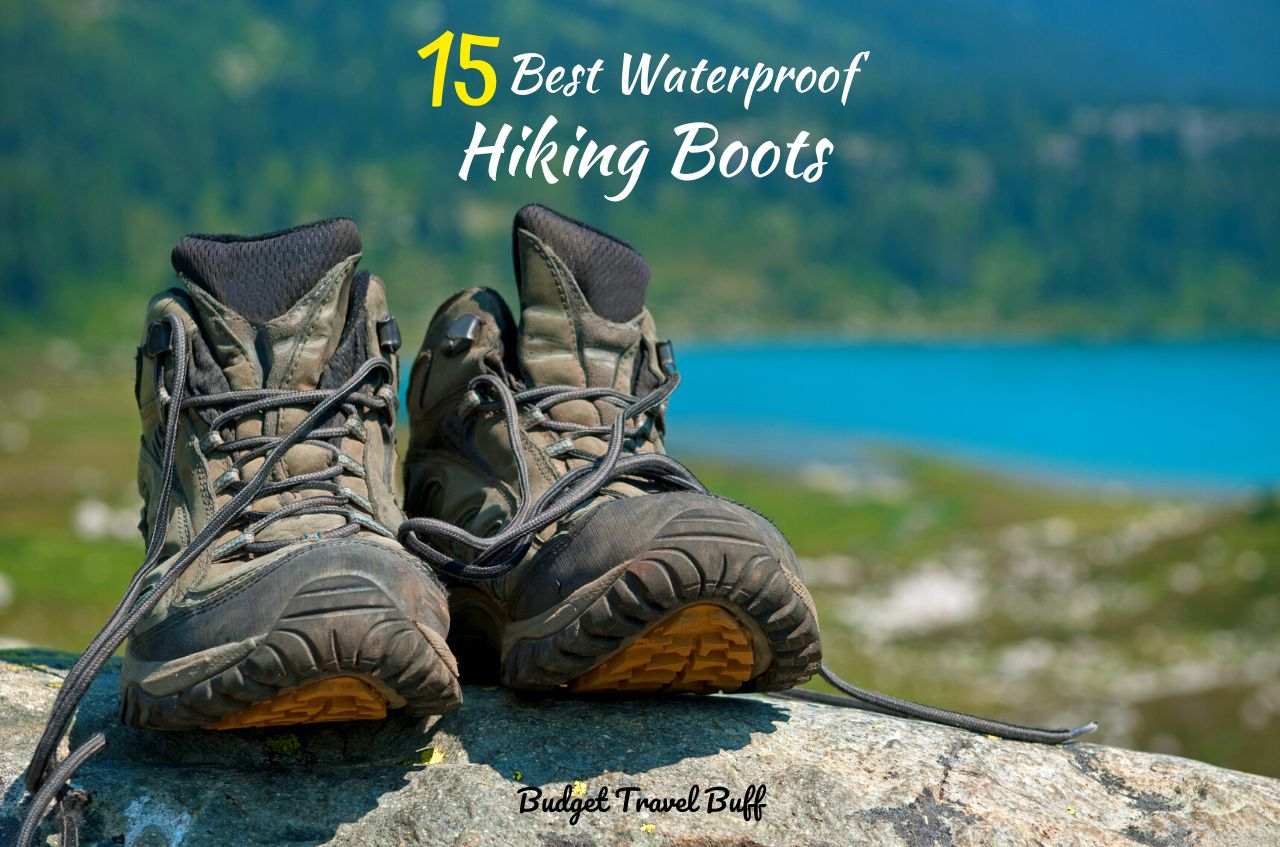
The pursuit of the American wilderness, particularly the diverse landscapes managed under the National Park System, is an endeavor that necessitates a profound level of preparation. For the dedicated hiker, the interface between the foot and the trail is not merely a matter of comfort but a critical component of safety and sustained performance. As topographical variety ranges from the arid, abrasive slickrock of the Southwest to the saturated, root-laden corridors of the Pacific Northwest, the demand for footwear that can endure such disparate stressors is immense.
Choosing the appropriate equipment requires an analytical departure from marketing-driven trends. The modern hiker must balance structural integrity, material resilience, and ergonomic fit to navigate inherently unpredictable terrain. This document serves as a technical reference for identifying, selecting, and maintaining footwear capable of handling the rigors of national park exploration, emphasizing systems-based thinking over casual acquisition.
Understanding “top national park hiking boots American.”
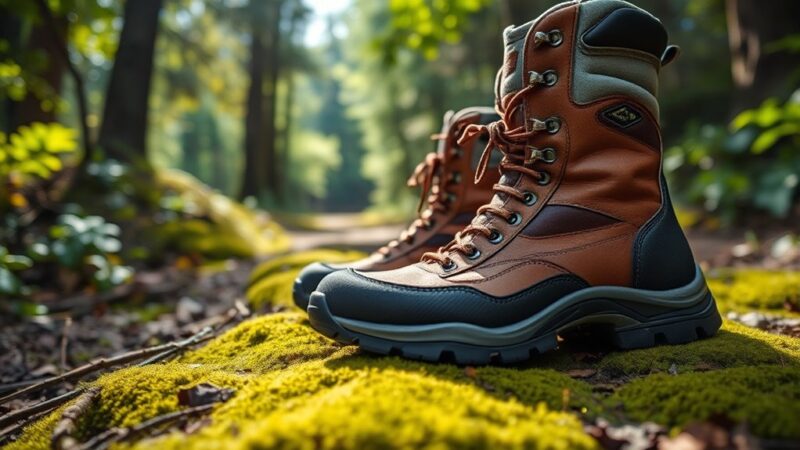
The search for top national park hiking boots often descends into a cycle of ephemeral product lists that fail to account for the actual mechanics of hiking. A fundamental misunderstanding persists: the assumption that a “good” boot is a universal constant rather than a variable solution dependent on terrain, load weight, and biomechanics. Oversimplification here, labeling a single model as the absolute “best” is a disservice to the hiker, as it ignores the necessity of environmental calibration.
A truly top-tier selection process begins by acknowledging the specific environmental challenges of the American National Park System. The grit of Zion’s sandstone, the high-altitude volcanic scree of the Cascades, and the humid, debris-strewn floors of the Smokies each exert unique physical demands on footwear. Recognizing the top national park hiking boots requires a synthesis of durability, traction, and fit that resists the degradation inherent to these intense environments.
Deep Contextual Background: The Evolution of Trail Footwear
Historically, hiking footwear evolved from rigid, heavy-duty leather constructs intended for alpine mountaineering toward lighter, highly engineered synthetic hybrids. The early 20th-century standard of “heavy as possible” has been replaced by the “optimal weight” philosophy, driven by advancements in polymer science and textile durability. Today, we manage a spectrum of options where the core innovation lies not in more material, but in more precise material application, such as high-denier ballistic nylon uppers and dual-density EVA midsoles that offer energy return while maintaining structural stability.
Conceptual Frameworks and Mental Models
-
The Biomechanical Load-Distribution Model: Analyze your footwear as part of a kinetic chain. Stiffer midsoles move the fulcrum of stress from the foot’s arch to the boot’s chassis, which is essential for heavy-pack stability but counterproductive for high-speed day hiking.
-
The Environmental Severity Index: Rate your destination by its abrasiveness, moisture profile, and verticality. High severity requires specialized outsoles (sticky rubber) and robust randing (toe protection).
-
The Break-In Cost/Benefit Analysis: Consider that a boot requiring zero break-in is often made of softer materials that will fail sooner. A “classic” leather build requires more investment upfront (time/pain) but offers superior long-term yield.
-
Redundancy as Risk: In backcountry settings, simplicity is the most reliable strategy. A boot with fewer seams is structurally superior to a highly decorative, multi-stitched model.
Key Categories and Organizational Variations
| Category | Primary Use Case | Key Material Feature | Limitation |
| Trail Runners | High-speed, light-load | Breathability/Flex | Low durability under load |
| Lightweight Hikers | Mixed terrain day-trips | Synthetic/Mesh blend | Reduced ankle support |
| Midweight Backpacking | Multi-day / Variable load | Leather/Synthetic hybrid | Moderate break-in time |
| Heavy-Duty Alpine | Off-trail / High-load | Full-grain leather | Heavy thermal fatigue |
Decision logic should prioritize the “load-terrain” constant: if the pack exceeds 35 pounds or the trail involves non-maintained scrambling, shift toward the midweight/heavyweight category to ensure structural chassis integrity.
Detailed Real-World Operational Scenarios
-
The Desert Scramble (e.g., Arches): Requires an outsole with high-surface-area contact (sticky rubber) and minimal mesh to prevent sand ingress. Failure mode: heat accumulation causing foot swelling.
-
The High-Alpine Traverse (e.g., Glacier): Requires stiff torsion control for lateral stability on side-sloping scree. Failure mode: sole delamination from repeated sharp rock contact.
-
The Temperate Rainforest (e.g., Olympic): Requires breathability paired with rapid-drainage capabilities. Waterproof membranes (Gore-Tex) often fail in these environments due to water ingress from the top (wicking).
-
The Multi-Day Trek (e.g., Yosemite): Requires a balanced “mid-weight” boot that mitigates fatigue over 15+ mile days. Failure mode: premature midsole compression.
Planning, Cost, and Resource Dynamics
| Resource Type | Investment Range | Amortized Life Expectancy |
| Entry-Level Hybrid | $120–$180 | 300–500 miles |
| Premium Backpacking | $250–$450 | 800–1,200 miles |
| Resole Service | $80–$120 | +500 miles |
The true cost is calculated per mile. A $400 boot that lasts for 1,200 miles is objectively cheaper and more reliable than three pairs of $150 boots that fail at 400 miles.
Risk Landscape and Failure Modes
-
The Hydrolysis Trap: Many synthetic midsoles disintegrate if left in storage for extended periods. This is a common failure for hikers who only hit the trails once a year.
-
Tread Abrasion: On abrasive sandstone, rubber treads act like sandpaper. Harder rubber compounds (Vibram Megagrip/XS Trek) have trade-offs between “stickiness” and durability.
-
Internal Lining Shredding: Often caused by grit entering the boot. Using gaiters is not a fashion choice; it is a critical piece of hardware maintenance to prevent internal abrasion.
Governance, Maintenance, and Long-Term Adaptation
Treat your footwear as a high-performance system.
-
Post-Trip Decontamination: Remove insoles, brush off interior grit, and air-dry in a cool, shaded environment. Direct heat (radiators) is the primary cause of leather cracking and midsole failure.
-
Waterproofing Cycles: Only re-treat when the leather “wets out” (darkens when wet). Over-treatment ruins breathability.
-
The Resole Trigger: As soon as the tread is worn flush (or the stitching on the midsole appears), seek a professional cobbler. Resoling preserves the “footbed memory” of the boot.
Measurement, Tracking, and Evaluation
Use a simple log to monitor your gear’s health.
-
Quantitative Signal: Track mileage by trip. Once you reach 500 miles, inspect the midsole compression visually.
-
Qualitative Signal: “Hot spots” or sudden increases in foot fatigue often indicate the loss of structural support (the “chassis collapse”).
-
Documentation Example: Maintain a notebook or simple spreadsheet tracking the boot model, total mileage, surface types encountered, and dates of maintenance treatments (waxing, cleaning).
Common Misconceptions and Oversimplifications
-
“Waterproof is always better”: In high-heat, high-moisture environments, waterproof boots function as “sweat buckets,” leading to macerated skin.
-
“Leather is outdated”: Full-grain leather remains the pinnacle of long-term durability and protection, despite being heavier than synthetic counterparts.
-
“Ankle support prevents sprains”: No boot replaces proper proprioceptive strength. Boots provide stability; muscles provide support.
Conclusion
The selection of top national park hiking boots, American models,s is a process of narrowing down variables to match the realities of your specific itinerary. True performance in the wilderness is achieved through a combination of high-grade, repairable equipment and a rigorous maintenance regime. By prioritizing structural longevity and biomechanical suitability over aesthetic preference, the modern hiker gains the resilience required to navigate the American landscape with confidence.