Top Drone Camera Kits in America: A Comprehensive Professional Guide
The rapid maturation of unmanned aerial systems (UAS) has fundamentally altered the landscape of visual production and remote sensing. What was once the exclusive domain of high-budget film crews utilizing stabilized, multi-person helicopter mounts has been democratized into portable, high-fidelity systems accessible to independent creators, commercial inspectors, and municipal planners alike. However, this technical accessibility masks a complex layer of operational, legal, and systemic realities that demand far more than a “ready-to-fly” mentality.
Successfully navigating the selection of high-end aerial equipment requires an understanding of how sensor physics, signal transmission, and flight dynamics converge within a single, integrated platform. As the industry settles into a period of sophisticated consolidation, the criteria for selecting reliable, high-performance systems have shifted away from simple “spec-sheet” dominance toward a focus on ecosystem reliability, regulatory compliance, and mission-specific adaptability. The nuance lies in the delta between a consumer-grade toy and a professional aerial instrument.
This analysis provides a structured, multi-dimensional framework for understanding the current state of professional and prosumer aerial imaging. It is intended to serve as a definitive reference for operators and decision-makers navigating the complexities of the American drone market, emphasizing the long-term utility of equipment over the fleeting nature of annual product releases.
Understanding “top drone camera kits in America.”
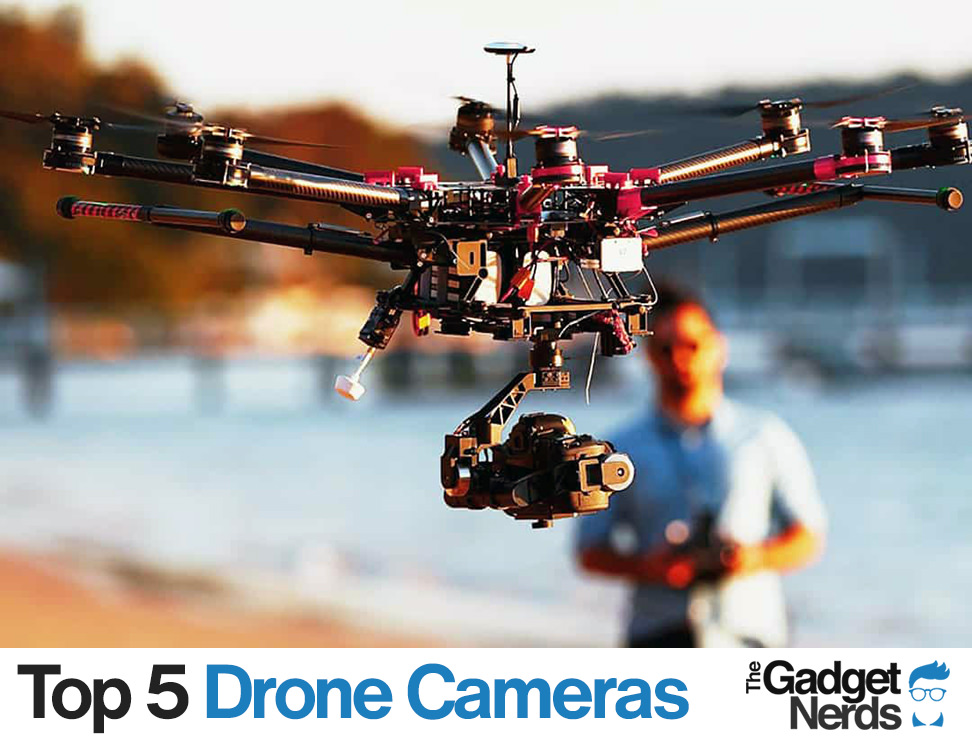
The designation of what constitutes the “best” equipment is frequently mired in marketing noise. When evaluating the top drone camera kits in America, it is vital to decouple raw hardware specifications such as megapixel counts or maximum flight speeds from the actual utility of the system. A camera kit is not merely the aircraft and the sensor; it is the entire chain of performance that includes transmission stability, the ergonomics of the control interface, the robustness of obstacle avoidance sensors, and the post-processing compatibility of the resulting data.
Common misunderstandings often stem from the conflation of hobbyist utility with commercial durability. A drone designed for casual photography may possess an impressive camera, but it often lacks the redundant flight controllers, encrypted data links, or modularity required for professional-grade, repeatable results in high-stakes environments. The term “kit” implies a bundle optimized for specific outcomes, and the most effective kits are those that minimize the friction between the operator’s creative or analytical intent and the resulting data output.
Furthermore, the “top” tier is highly dependent on the operator’s specific vertical. An architectural firm requiring 3D photogrammetry has fundamentally different needs than a wildlife documentarian tracking movement in dense canopy. Attempting to force a single, universal ranking upon these disparate needs leads to poor resource allocation and operational failure. Identifying the top drone camera kits in America requires first defining the constraints of the mission, as the hardware is ultimately a specialized tool rather than a general-purpose appliance.
The Evolution of Aerial Imaging Systems
The American drone market has evolved from the era of bespoke, do-it-yourself hobbyist builds to a highly integrated, software-driven ecosystem. In the early 2020s, the market was defined by a rapid, almost chaotic proliferation of features; today, the landscape is defined by reliability, vertical integration, and regulatory hardening.
Systemic shifts in manufacturing and global supply chains have also forced a bifurcation in the market. Operators focusing on federally funded projects, critical infrastructure, or sensitive government contracts must now navigate the distinction between standard commercial platforms and NDAA-compliant, Blue UAS-listed equipment. This evolution means that the “best” tool for a real estate agent capturing residential imagery may be fundamentally incompatible with the needs of a utility provider performing power-line inspections, regardless of the camera’s visual output quality.
We have moved beyond the “first-generation” struggle of simply keeping a drone in the air. The challenge today is data integrity and security. As these systems become integrated into corporate and municipal workflows, the hardware must be viewed as a node in a larger information technology infrastructure.
Conceptual Frameworks and Mental Models
To avoid the pitfalls of feature-chasing, operators should apply rigorous mental models when assessing equipment:
-
The Mission-Payload Balance: Every ounce of weight added to a drone has a non-linear impact on battery life and flight characteristics. The most effective systems prioritize the “power-to-payload” ratio, ensuring that the sensor is sufficient for the job without compromising the aircraft’s agility.
-
The Ecosystem Lock-in Model: Consider the cost of ownership beyond the initial purchase. Software subscriptions, proprietary battery formats, and integrated flight-management systems create an “ecosystem” that is difficult to exit. Evaluate whether the platform’s software suite aligns with your long-term creative or operational goals.
-
Redundancy as Strategy: Professional environments demand multiple points of failure protection. This includes dual IMUs (Inertial Measurement Units), redundant GPS/GNSS receivers, and intelligent return-to-home protocols. If a system is not “failsafe-first,” it is rarely suitable for high-value professional applications.
-
The Data Pipeline Constraint: The “top” drone is useless if the post-processing workflow cannot handle its raw output. High-bitrate video or massive photogrammetry datasets require significant storage and processing power. Always calculate the “Cost of Data Management” alongside the hardware cost.
Key Categories and Performance Variations
Categorizing the top drone camera kits in America allows for more precise decision-making. These categories are defined by their intended operational threshold rather than price alone.
| Category | Primary Application | Key Strength | Primary Constraint |
| Ultra-Compact | Travel, Social Media | Portability, Rapid Deployment | Limited dynamic range/bitrate |
| Prosumer | Weddings, Indie Film | High Resolution, Color depth | Manual flight proficiency needed |
| Enterprise | Mapping, Thermal, SAR | Modular payloads, RTK accuracy | Steep learning curve |
| Industrial | BVLOS Operations | Extreme weather/interference | High logistics, heavy maintenance |
Decision logic should prioritize the “minimum viable capability.” If a mission does not require thermal imaging or multi-spectral sensors, purchasing an industrial platform introduces unnecessary weight and complexity. Conversely, choosing a prosumer model for structural inspection risks systemic failure due to the lack of weather sealing and mission-critical redundancies.
Detailed Real-World Operational Scenarios
Understanding how these kits perform under pressure requires examining specific constraints:
-
Urban Cinematography: High RF interference from city infrastructure requires robust, frequency-hopping transmission protocols. The failure mode here is often video latency or signal dropout, which can lead to catastrophic collisions.
-
Agricultural Mapping: The constraint is battery life and flight path efficiency. The kit must be able to interface with third-party software for autonomous mission planning and data stitching. The “top” kit is the one that minimizes ground control point (GCP) setup time.
-
Search and Rescue (SAR): Night operations require thermal sensors with high sensitivity. The secondary effect here is the operator’s ability to interpret data in high-stress environments. A complex menu system is a failure point.
-
Remote Inspection: Long-distance flight (BVLOS) necessitates redundant communications and high-capacity battery systems. The decision point is the ability to swap batteries in the field and resume the mission immediately without needing to recalibrate the home point or sensors.
Planning, Cost, and Resource Dynamics
The investment landscape is rarely captured by a single purchase price. Operators must account for the full lifecycle cost.
| Cost Component | Typical Variability | Long-Term Impact |
| Hardware | $1,000 – $30,000+ | Initial depreciation |
| Battery Fleet | $200 – $600 per unit | Critical for mission duration |
| Software/Data | $50 – $500 monthly | Operational recurring cost |
| Certification | $150 – $1,000 per pilot | Compliance/Insurance requirement |
Opportunity costs arise when a platform is too slow to mobilize or too complex to repair in the field. When scouting for the top drone camera kits in America, businesses should build in a 20% margin for “hidden” costs, including spare parts, insurance premiums for commercial hulls, and specialized transport cases.
Tools, Strategies, and Support Systems
Success is rarely the result of the drone alone. A professional kit includes:
-
Field Stations: Portable power banks and workstations to process data on-site.
-
Logbook Software: Digitized, automated flight logging for FAA compliance.
-
Weather Stations: Portable anemometers to verify flight-level wind speeds.
-
ND/Polarizing Filter Kits: Essential for managing exposure in high-contrast environments.
-
Backup Command Links: Secondary antennas or range extenders for challenging environments.
These tools are not accessories; they are structural components of a professional operation. A pilot without a reliable logbook or accurate weather monitoring is significantly more likely to experience a “loss-of-control” event.
Risk Landscape and Failure Modes
The risk landscape for aerial operations is compounding. A simple hardware failure, if not managed, leads to a legal failure, which then leads to a financial failure.
-
Sensor Saturation: Flying directly into low-angle sun without proper filters can burn pixels on modern high-end sensors.
-
Firmware/Software Mismatch: Updating the aircraft firmware without updating the remote controller or the mission software is a leading cause of mid-flight glitches.
-
Environmental Degradation: Even “weather-resistant” drones are susceptible to salt-air corrosion in coastal environments. Regular cleaning and lubrication of motor mounts are mandatory for equipment longevity.
Governance, Maintenance, and Long-Term Adaptation
Professionalizing the use of the top drone camera kits in America requires a shift from “piloting” to “fleet management.”
-
Review Cycles: Establish a quarterly review to determine if current equipment still meets the business’s technological requirements. Drone technology often outpaces the need for an upgrade; do not upgrade unless the performance gain provides a measurable ROI.
-
Layered Checklist: A three-tier checklist system—pre-flight, in-flight, and post-flight—is the gold standard for reducing operational risk.
-
Adaptation Triggers: When do you decommission a unit? Establish clear metrics, such as “battery health below 70%” or “motor vibration levels exceeding specified thresholds,” to trigger replacement.
Measurement, Tracking, and Evaluation
How do you know if your aerial program is succeeding?
-
Leading Indicators: Flight-hour growth, pilot proficiency certifications, and equipment uptime.
-
Lagging Indicators: Data quality errors, rework hours, and the number of insurance claims.
-
Documentation: Maintain a comprehensive “Mission Folder” for every job, containing the site safety analysis, the flight logs, the weather data, and the final exported deliverables.
Common Misconceptions and Oversimplifications
-
“Obstacle Avoidance Replaces Skill”: Sensors are aids, not autonomous pilots. Relying on them is a recipe for complacency.
-
“High Megapixels Equal High Quality”: Signal-to-noise ratio and bit-depth are more important than sheer pixel density for aerial photography.
-
“The Drone is the Camera”: In professional cinematography, the drone is simply the mount. The kit has the ability to control exposure, white balance, and shutter speed mid-flight.
-
“Universal Kits”: There is no single kit that excels at everything. The “top” kit is always a compromise tailored to a specific mission profile.
-
“All Batteries are Created Equal”: Managing LiPo charge cycles is a core skill for any professional pilot.
Ethical and Contextual Considerations
Operating UAS in American airspace is a privilege governed by evolving federal, state, and local laws. Privacy concerns, noise pollution, and the proximity to sensitive wildlife or infrastructure are not just ethical considerations; they are legal risks. A professional pilot must prioritize the public perception of the industry by adhering to strict “good neighbor” policies and staying informed about the latest FAA Part 107 guidelines. Being able to operate the top drone camera kits in America requires not just technical mastery but also the social awareness to deploy these tools responsibly.
Conclusion
The selection and maintenance of high-performance aerial systems are not trivial tasks. They require a synthesis of technical knowledge, operational discipline, and a clear understanding of the regulatory landscape. As the market for the top drone camera kits in America continues to mature, the distinction between hobbyists and professionals will become increasingly defined by the reliability, safety, and data-integrity standards that an operator brings to their work.
True authority in this space is not found in the newest hardware release, but in the sustained ability to execute complex missions with consistent results. By focusing on systemic reliability, rigorous maintenance, and mission-appropriate equipment selection, operators can ensure that their aerial assets remain viable, productive, and compliant for years to come. The goal is to build an operation where the hardware becomes a transparent extension of the mission itself, enabling results that were once considered impossible.