Business Travel Gear Overview: The Definitive Guide for Professional Mobility
The professional mobility landscape has undergone a profound structural shift, moving away from the era of heavy, high-volume checked baggage toward an environment defined by extreme portability, rapid deployment, and high-stakes reliability. For the modern executive, consultant, or itinerant professional, the ability to transition seamlessly between global transit hubs and boardroom environments is not merely a convenience; it is a core operational competency. This shift necessitates a departure from traditional packing methodologies and the adoption of a systems-based approach to managing the physical tools of a trade.
True organizational efficacy in this domain is rarely found in the acquisition of expensive, status-oriented goods; it is instead cultivated through the deliberate curation of equipment that provides resilience under pressure. The objective is the mitigation of logistical friction. When the physical loadout is optimized for both durability and modularity, the professional is freed from the cognitive burden of equipment management, allowing for total focus on the professional output itself.
This article serves as a definitive reference for those tasked with building, auditing, and maintaining a high-performance travel kit. It eschews surface-level recommendations in favor of a technical examination of the frameworks, risks, and maintenance protocols that define the state of the art in professional transit.
Understanding “business travel gear overview.”

The search for a comprehensive overview of business travel gear often yields fragmented results that confuse consumer aesthetics with structural integrity. To understand the requirements of high-level professional transit, one must move past the idea of “packing a bag” and instead conceive of the kit as an integrated operational system. A common misunderstanding involves the assumption that equipment must be “versatile” in a way that attempts to solve every possible problem; in reality, the most reliable kits are those that are precision-engineered for the specific constraints of the user’s primary professional domain.
Oversimplification in this field introduces significant risk. A kit designed for an office-centric role will catastrophically fail in a field-heavy assignment if it lacks the necessary environmental protections. The risk of treating this as a simple checklist is that it ignores the compounding effects of failure, where a single broken zipper or incompatible charging port can cascade into a loss of professional reputation. Achieving a robust overview of business travel gear requires a deep dive into the engineering of the components, understanding the difference between ballistic nylon and standard polyester, recognizing the impact of heat on battery chemistry, and evaluating the ergonomic necessity of load-distribution systems for long-haul transit.
The Evolution of Professional Mobility
Historically, the business traveler was tethered to heavy infrastructure, reliant on physical documentation, bulky computing hardware, and an environment that favored static, centralized operations. The contemporary professional exists in a liquid workspace, where the connectivity of the cloud has decoupled productivity from location. This evolution has necessitated a parallel advancement in hardware. We have transitioned from the “trunk” era of travel to the “micro-modular” era, where high-speed data transmission, hyper-dense power delivery, and lightweight, high-strength textiles permit an unprecedented level of individual agency.
Conceptual Frameworks and Mental Models
-
The Component Interdependency Model: View your travel system as a series of connected dependencies. If your laptop is the core, every piece of gear from the power adapter to the carry-on is an interface. If any interface fails, the core is compromised.
-
The Deployment Velocity Metric: Rank equipment by the speed at which it must be deployed during a transit crisis. High-velocity items (passport, primary tech, chargers) belong in high-access, hardened zones.
-
The Force Function of Size: By choosing a vessel that is slightly smaller than the current requirement, you force a constant process of optimization. This prevents the “just-in-case” bloat that is the primary enemy of efficient professional travel.
-
The Redundancy-Efficiency Parity: For every piece of redundant gear added, calculate the weight penalty. Only keep the redundancy if the cost of item failure exceeds the cost of carrying the extra weight for the duration of a trip.
Categorizing Performance and Materiality
| Category | Best For | Technical Metric | Potential Failure Mode |
| Structured Hardshell | Protection of tech | Crush resistance | Joint/Zipper failure |
| Modular Soft-side | Dynamic packing | Compression efficiency | Abrasion resistance |
| High-Wattage GaN | Power density | Thermal degradation | Port throughput limits |
| Performance Layers | Climate regulation | Moisture management | Style limitations |
Decision logic for these categories should be driven by the “worst-case environmental factor” of the mission. A professional operating in a climate-controlled conference circuit has vastly different requirements than one engaged in off-site inspections or international logistics.
Operational Scenarios and Decision Logic
-
The High-Velocity Connector: You are moving through three cities in four days. The primary constraint is time. The failure mode is a security hold-up; therefore, all tech must be modularized for rapid “bin-less” removal.
-
The Technical Consultant: You are based in a secondary city for a three-week engagement. The constraint is office-in-a-bag capability. The failure mode is equipment failure; you require a localized, redundant peripheral suite.
-
The Trans-Oceanic Executive: You are on a 14-hour flight. The constraint is comfort and energy management. The failure mode is the loss of productivity due to fatigue; the focus must be on high-density power banks and noise-attenuation infrastructure.
Planning, Cost, and Resource Dynamics
The investment in professional-grade transit systems must be viewed as capital expenditure.
| Resource Type | Investment Range | Amortized Life Cycle |
| Primary Luggage | $300–$900 | 7–12 years |
| Power/Tech Ecosystem | $150–$400 | 3–5 years |
| Apparel/Organizers | $200–$600 | 4–8 years |
The hidden cost is the “friction tax,x” the time lost, the stress generated, and the missed appointments caused by equipment that is poorly planned or prone to failure. High-quality gear amortizes its cost rapidly by eliminating the need for interim replacements.
Tactical Strategies and Support Systems
-
Standardization of Protocols: Eliminate non-standard cables. Standardize every device on USB-C where possible to minimize port congestion and complexity.
-
The “Zero-Reset” Routine: Immediately upon returning from a trip, reset your bag to its “base state.” This ensures that you are never caught unprepared for the next departure.
-
Digital Inventory Control: Track your gear with a simple, high-level spreadsheet. It is the only way to avoid the “phantom inventory” problem, where you repeatedly buy duplicates of gear you already own but have misplaced.
-
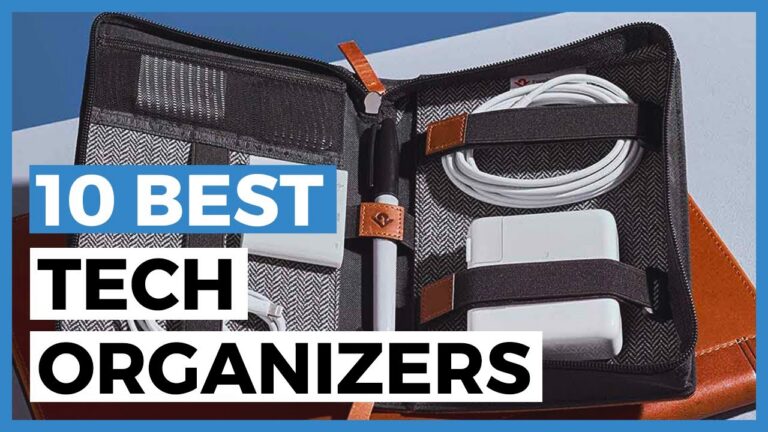
The Tech “Black-Box”: Dedicate a single, reinforced pouch for every cable, charger, and peripheral. This pouch should never leave the primary bag.
The Risk Landscape: Failure Modes and Taxonomy
-
Thermal Accumulation: High-wattage charging in confined spaces leads to premature battery degradation. Ensure your tech organization permits airflow.
-
Material Fatigue: Most budget bags fail at the zipper. Always prioritize YKK or industrial-grade hardware.
-
Security Complexity: An over-compartmentalized bag creates a bottleneck at security, increasing the probability that you will be forced to check the bag, which increases the risk of loss or damage.
Governance, Maintenance, and Long-Term Adaptation
-
Quarterly Audit: Remove everything from your primary bag. If you haven’t used an item in two consecutive trips, it is a candidate for removal.
-
Repairability Over Replacement: Prioritize manufacturers who offer replacement parts (e.g., luggage wheels, handles). The ability to repair is a sign of long-term structural reliability.
-
Trigger Events: Re-evaluate your kit when you switch platforms (e.g., from laptop to tablet-heavy workflows) or when your environmental footprint shifts.
Measurement, Tracking, and Evaluation
-
The “15-Minute Rule”: If your total setup time from entering your hotel/office to being fully productive exceeds 15 minutes, your gear system is failing.
-
Qualitative Audit: Do you feel a sense of unease when you realize a piece of gear is missing? A well-planned kit has enough redundancy that the loss of one accessory does not stop the mission.
-
Metric Logging: Keep a brief note on any item that failed or caused friction on a trip. If an item causes friction twice, it must be replaced or re-engineered.
Deconstructing Myths and Oversimplifications
-
“One Bag to Rule Them All”: False. The requirements for a 24-hour city trip are fundamentally different from a week-long technical deployment.
-
“Expensive equals Durable”: Luxury branding often trades structural strength for aesthetics. Look for industry-specific provenance rather than retail marketing.
-
“More Pockets means Organization”: Excessive pocketing leads to “storage blindness.” Simplicity in design is the hallmark of high-performance gear.
-
“Waterproof is the Goal”: Water-resistant is often superior. Fully waterproof gear is often too heavy and lacks the breathability required for dynamic environments.
Conclusion
Mastering your professional transit system is an ongoing exercise in iterative refinement. By treating your gear as a cohesive, high-performance infrastructure, you insulate yourself from the common stresses of the road. A comprehensive business travel gear overview isn’t about what you buy; it’s about how you integrate those tools into a seamless, failure-resistant workflow. True agility is found in the removal of unnecessary variables, enabling you to focus entirely on the objectives of your travel rather than the mechanics of the gear that facilitates it.