Minimalist Business Travel Gear USA: The Professional’s Guide to Efficient Transit
The modern landscape of professional mobility has undergone a structural shift, moving away from the accumulation of high-volume, checked-baggage systems toward the precision of high-performance, carry-on-only workflows. For the contemporary executive or consultant, the capability to move through global transit hubs without the friction of baggage claims or the risk of logistical failure is not merely a preference; it is a fundamental pillar of professional reliability. Achieving this level of agility requires a departure from traditional “packing” and an adoption of “systems engineering” as applied to personal assets.
This transition toward a lean travel profile is not about deprivation or the performative aesthetic of minimalism. Rather, it is a deliberate optimization of the individual’s environment to support high-stakes work. When the barrier to entry for travel decreases, the professional’s ability to respond to changing market conditions increases. This article serves as a reference for those seeking to build a durable, resilient, and highly efficient travel ecosystem that maximizes performance while minimizing the physical and cognitive load of transit.
Understanding “minimalist business travel gear USA.”
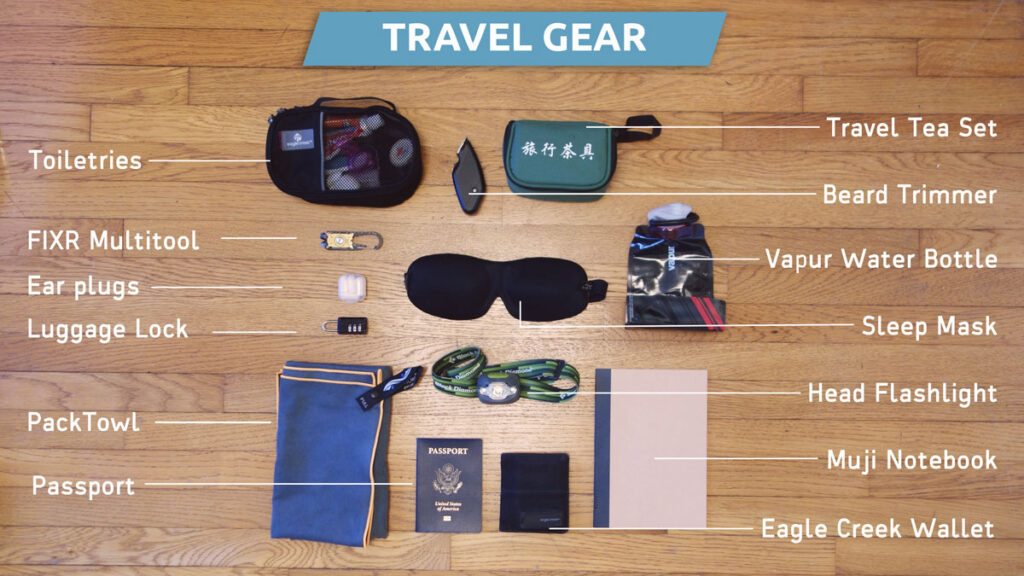
The search for minimalist business travel gear frequently results in a catalog of aesthetic-focused articles that prioritize color palettes over technical capability. To master the art of lean travel, one must redefine the core objective: the objective is not to pack less, but to pack precisely for the specific contingencies of a professional assignment. Misunderstandings often stem from the conflation of “travel” with “tourism.” While the latter may tolerate forgotten items or slow-paced recovery, the former demands a failure-resistant kit that remains functional across high-pressure environments.
The oversimplification risk here is profound. Many travelers assume that replacing a large bag with a smaller one satisfies the requirement. However, true efficiency is found at the intersection of material durability, modular organization, and ergonomic design. Selecting the best equipment involves analyzing your specific transit patterns, frequent domestic hops versus long-haul international flights, and identifying the specific failure points in your current configuration. It is about replacing generic, mass-market utility with intentional, high-specification tools that perform under load and survive years of recurring service.
The Evolution of Hardware Stewardship
Historically, business travelers were constrained by the limitations of their luggage. The industry dictated that longer trips required larger suitcases. Today, advancements in textile science, compression technology, and digital integration have inverted this paradigm. We are now in the age of the “Professional One-Bag,” where high-denier fabrics and sophisticated internal architectures allow the same suitcase to serve a 48-hour domestic shuttle as effectively as a week-long international conference. This shift reflects a broader professional imperative: the reduction of overhead in all facets of operation, where portability is viewed as a competitive advantage.
Conceptual Frameworks and Mental Models
To effectively curate minimalist business travel gear in the USA, practitioners should employ these frameworks:
-
The Zero-Failure Protocol: Evaluate every item in your kit based on the consequence of its failure. A non-essential gadget has low consequence; a high-wattage power adapter has high consequence. Optimize your budget and weight allocation toward high-consequence items.
-
The Modularity Principle: Avoid “all-in-one” designs that lack flexibility. A hard-shell carry-on with a removable internal organization system allows you to adapt the interior space based on whether you are carrying dress clothes, technical gear, or both.
-
The Weight-Utility Ratio: Every ounce of gear must provide a quantifiable benefit to your productivity or physical well-being. If an item is carried “just in case,” it is an anchor.
-
The Environmental Calibration: Recognize the difference between “showroom” travel (easy, climate-controlled) and “field” travel (variable weather, rough infrastructure). Choose equipment that is over-engineered for the average case so that it remains functional in the worst case.
Key Categories and Organizational Variations
Effective gear is segmented by function. Comparing these categories helps in making informed decisions about where to invest resources.
| Category | Best For | Technical Metric | Potential Trade-off |
| Structured Hardshell | Business protection | Impact resistance | Inflexible footprint |
| Modular Soft-side | Dynamic packing | Compression efficiency | Less impact protection |
| Tech Organizers | Cable/accessory management | Visibility/Access | Can add unnecessary bulk |
| Merino Layers | Wardrobe efficiency | Odor/Weight management | Higher maintenance |
Decision logic for these categories should prioritize the most frequent failure points. For example, if you frequently work in transit, the accessibility of your laptop and charging components is more important than the weight of your shoes.
Detailed Real-World Operational Scenarios
-
The Short-Haul Shuttle: You have a 24-hour turnaround with one high-stakes meeting. The priority is a wrinkle-resistant wardrobe and high-speed security throughput. The failure mode here is a “messy” arrival; focus on a structured garment bag or suit-integrated carry-on.
-
The International Conference: You are away for five days. You need a mix of business formal and “business casual” for networking. The failure mode is volume; use compression cubes to maintain a slim footprint.
-
The Technical Consultant: You carry proprietary gear or specialized peripherals. The failure mode is security scrutiny; use a modular, clear-pocketed tech pouch that allows for rapid inspection without unpacking individual items.
Planning, Cost, and Resource Dynamics
The investment in minimalist business travel gear USA should be viewed as an operational expenditure, not a consumer purchase.
| Resource | Investment Range | ROI / Indirect Value |
| Tier-1 Luggage | $300–$800 | Longevity; 5-10+ year lifespan |
| Tech Ecosystem | $100–$300 | Reduced transit friction; reliability |
| Capsule Wardrobe | $500–$1,500 | Productivity; simplified decision making |
The opportunity cost of cheap gear is time and reliability. If a $50 zipper fails during an important trip, the real cost includes lost time, stress, and potential replacement fees.
Tools, Strategies, and Support Systems
-
Compression Systems: Use high-quality, zippered compression cubes rather than vacuum bags, which are prone to leaks and require external tools.
-
The “Go-Bag” Logic: Keep your charging cables and personal care items in a dedicated, pre-packed pouch that never leaves your primary bag.
-
Hardware Standardization: Standardize your power ecosystem around a single high-wattage (e.g., 100W+) GaN charger that can power both your laptop and phone simultaneously.
-
Digital Redundancy: Always maintain an offline-accessible digital copy of your itinerary, ID, and essential documents.
Risk Landscape and Failure Modes
-
Material Fatigue: Most budget bags fail at the wheels or the zipper track. Look for YKK or equivalent hardware and high-grade, ball-bearing spinner wheels.
-
Incompatibility: Avoid proprietary charging ports or non-standard connectors. Stick to universal USB-C standards to ensure you can find replacements in any major city.
-
Security Obstruction: Over-compartmentalized bags often complicate TSA security checks. A bag that allows for “rapid access” to a laptop is superior to one that requires a full deconstruction.
Governance, Maintenance, and Long-Term Adaptation
-
Quarterly Review: Once a quarter, conduct a “gear audit.” Remove every item from your bag. Re-evaluate if every piece of equipment actually earned its spot on your last three trips.
-
Repair vs. Replace: Prioritize gear that offers repair services (e.g., luggage with replaceable wheels or zippers). This is more sustainable and often more reliable than frequent replacement.
Measurement, Tracking, and Evaluation
-
The “Door-to-Boardroom” Metric: Measure the time from leaving your taxi to sitting at your destination desk. If this exceeds 15 minutes, your organization’s system requires adjustment.
-
Qualitative Audit: Do you feel “rushed” or “unprepared” when traveling? If so, the friction is in your gear setup, not your schedule.
Common Misconceptions and Oversimplifications
-
“Lighter is always better”: Strength is paramount. If a bag is so light that it has no structural integrity, it will crush your clothes and stress the zippers.
-
“Everything must be expensive”: High cost does not guarantee high utility. Many premium brands offer “lifestyle” features that add weight without adding professional functionality.
-
“Packing less is the goal.: The goal is “optimal loadout.” Having one fewer shirt is not a success if it forces you to spend an hour at a dry cleaner’s on your trip.
Ethical and Contextual Considerations
The pursuit of minimalist business travel gear usa also involves a commitment to durable, repairable items that reduce the cycle of consumer waste. Opt for manufacturers that provide lifetime warranties and ethical supply chains. As you refine your kit, pass on discarded, functional items to others, fostering a cycle of intentional ownership.
Conclusion
Mastering your professional travel environment is a process of iterative refinement. By treating your minimalist business travel gear USA as a cohesive system designed for high-performance reliability, you insulate yourself from the common stresses of the road. Success is found in the removal of unnecessary friction, the standardization of critical infrastructure, and a steadfast commitment to equipment that earns its place in your kit.