Premium Leather Passport Holders USA: A Guide to Durable Travel Gear
The passport is arguably the most significant document a traveler possesses, serving as the essential key to sovereign borders and international mobility. Given its centrality to global movement, the vessel chosen to house this document, the passport holder, is often reduced to a mere aesthetic accessory. In reality, a sophisticated passport holder acts as a structural safeguard, a logistical organizer, and a long-term investment in the preservation of a document that is prone to physical degradation, moisture damage, and electronic theft. When the discussion turns to the American market, the focus shifts toward a specific tier of craftsmanship that prioritizes material integrity and heritage-style construction over the rapid, disposable cycles of mass-market retail.
Distinguishing between a standard document sleeve and a professional-grade asset requires a granular understanding of leather science, stitch mechanics, and ergonomic design. The contemporary traveler, navigating an environment of increased security checkpoints and persistent transit, requires a system that minimizes friction at every turn. A thoughtfully engineered holder does not merely store a document; it streamlines the presentation of travel credentials, protects the integrity of the passport’s data pages, and develops, through the organic process of patina, a unique record of the owner’s journey.
Understanding “premium leather passport holders USA.”
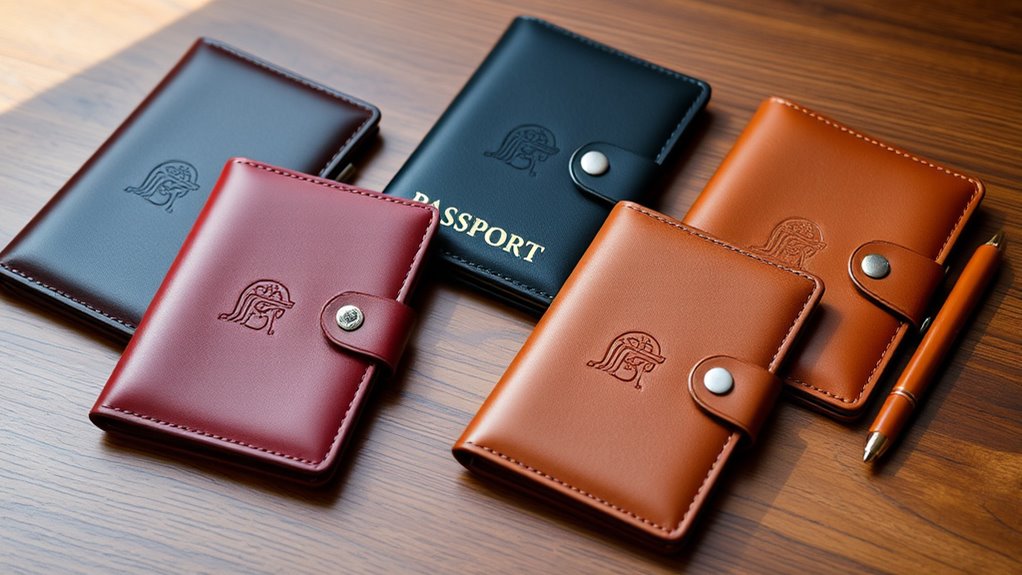
The term premium leather passport holders USA ” refers to a specific subset of travel accessories that are defined not just by their origin, but by a commitment to full-grain materials and high-tensile construction methods. A common misunderstanding is that all leather goods labeled “genuine” or “imported” possess the same lifespan; however, the designation of premium leather passport holders usa usually implies a focus on small-batch production, where each hide is inspected for density, grain consistency, and structural resilience.
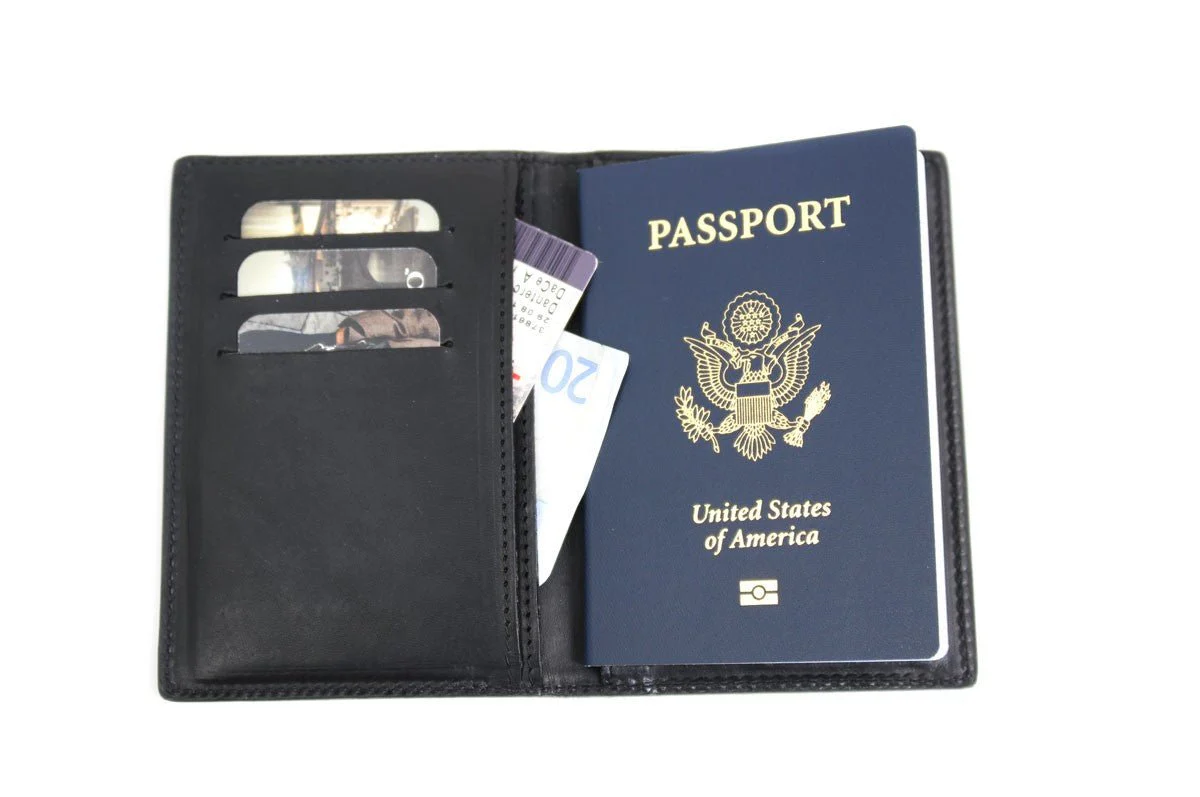
When searching for premium leather passport holders in the USA, buyers often face the risk of oversimplification, where aesthetics are prioritized over mechanical function. A holder that is overly rigid, for example, may be difficult to manipulate during a fast-paced security screening, while one that is too thin may offer no protection against the bending or creasing of the passport’s critical integrated chip. True premium leather passport holders USA are engineered to strike a precise balance: they must be robust enough to shield the document from environmental hazards like humidity or accidental spills, yet slim enough to maintain a low profile in a pocket or briefcase.
The Systemic Evolution of Document Preservation
The evolution of document storage has mirrored the professionalization of the traveler. Initially, documents were loose, prone to wear, and easily misplaced. As international travel became more frequent, the need for a specialized vessel grew. The transition from simple folders to integrated document systems that incorporate space for boarding passes, currency, and secondary identification has fundamentally changed how travelers interact with their papers. Modern American artisans have taken this shift further, utilizing traditional saddle-stitching techniques that, unlike machine-locking stitches, will not unravel even if a single stitch is severed, ensuring the holder remains intact for decades.
Conceptual Frameworks: Physics and Ergonomics
1. The Stability-Weight Ratio
A passport holder must provide enough structure to prevent the passport from folding in a bag, without adding the unnecessary weight of rigid, plasticized inserts. This requires the use of high-density, vegetable-tanned leather that provides structural stiffness through its natural fiber density rather than added chemical agents.
2. The Friction Coefficient
The interior lining and card slots are critical. Too much friction makes removing a passport during a boarding check difficult; too little allows cards to slide out during transit. Precision-cut leather edges, often finished with burnished wax, provide the perfect tactile resistance for secure, efficient document handling.
3. The Path-of-Presentation Model
This framework analyzes the “speed-to-hand” metric. How quickly can a traveler access their passport, boarding pass, and customs declaration form? The best designs minimize the number of flaps or zippers, prioritizing a minimalist, intuitive layout that allows for one-handed operation.
Categorizing Leather Goods: Material Trade-offs
| Material Tier | Composition | Durability | Aesthetic Evolution |
| Full-Grain | Entire hide, natural top layer | Highest | Excellent Patina |
| Top-Grain | Corrected surface, thin layer | High | Minimal Patina |
| Genuine/Bonded | Leather pulp/scraps | Low | None (Surface peels) |
Decision Logic: For the frequent traveler, full-grain is the only viable option. While corrected or “genuine” leathers are more uniform in appearance, they lack the structural fiber strength to endure years of being pulled from bags and subjected to the varying humidity levels found in airport terminals and transit vehicles.
Real-World Scenarios: Failure Modes and Field Utility
-
Scenario A: The High-Humidity Climate. A traveler crossing into a tropical region may find that cheaper adhesives used in mass-produced holders begin to fail or degrade due to moisture. A premium, hand-stitched, non-lined holder avoids this failure mode entirely.
-
Scenario B: The Security Queue “Dangle.” A poorly designed holder lacks the “grip” to prevent a passport from sliding out during a hasty packing process. A high-quality holder uses a specific tension-based pocket design to ensure the document remains seated even if the holder is inverted.
Economic Dynamics: Cost, Value, and Opportunity
| Investment Level | Economic Profile | Life Cycle Expectancy |
| Entry (Synthetic) | Low cost, high replacement | 6–12 months |
| Mid-Market (Mass-Leather) | Moderate cost, adhesive-based | 2–4 years |
| Premium Artisanal | High initial cost, repairable | 10–20+ years |
The opportunity cost of “budget” accessories is cumulative. Replacing a failed passport holder every year is not only an economic drain but also an environmental liability. Investing in premium leather passport holders in the USA effectively amortizes the cost over two decades, making it a sound fiscal decision for the long-term traveler.
The Risk Landscape: Security and Mechanical Failure
A primary concern is electronic theft, leading to the rise of RFID-blocking layers. However, when choosing premium leather passport holders USA, ensure the block is implemented via thin, non-bulky materials. A failure in the stitching, often the result of tension stress at the corners, is the most common mechanical breakdown. Always inspect the “stress points” (the corners of card slots) for reinforcement; quality manufacturers often use a double-stitch or cross-tack in these areas to prevent tearing.
Governance: Maintenance and Long-Term Adaptation
A passport holder requires a structured maintenance cycle:
-
Quarterly Conditioning: Apply a small amount of neutral leather balm to keep fibers supple and prevent cracking, especially after travel in dry, high-altitude cabins.
-
Edge Burnishing: If the wax-sealed edges begin to fray due to friction, they can be re-burnished with a damp cloth and specialized wax.
-
Audit Cycles: Every 12 months, remove all contents to inspect the interior pockets for accumulated debris or grit that can act as an abrasive against the leather’s inner surface.
Common Misconceptions and Oversimplifications
-
Myth: “RFID blocking is 100% necessary.”
Correction: While an added layer of security, the structural integrity of the leather is more important to the physical safety of your document. -
Myth: “The holder should be very thick to be safe.”
Correction: Excess thickness adds weight and bulk, making the item harder to store securely in an interior jacket pocket. -
Myth: “Leather doesn’t need care.”
Correction: High-quality natural hide is skin; if it dries out, it loses its structural strength, and susceptibility to cracking increases.
Conclusion
The selection of a passport holder is a reflection of how a traveler prioritizes their most vital tool of movement. By moving toward the standard of premium leather passport holders USA, one secures not just a cover, but a resilient, evolving, and reliable companion for years of international transit. This choice represents a rejection of the disposable, favoring the intersection of American material tradition and the practical demands of modern navigation instead. Whether one is navigating a business trip or an extended journey, a meticulously crafted leather holder provides the necessary assurance that when the time comes to present one’s credentials, the process will be seamless, professional, and secure.