How to Plan Family Travel Gear on a Budget: A Professional Guide
The logistical demands of family travel are fundamentally different from those of solo or professional excursions, not merely in scale but in the complexity of the requirements. When multiple individuals with varying physical needs and developmental stages must be moved through complex transit environments, the equipment required to facilitate this movement often becomes a major financial burden. The prevailing consumerist approach, where families purchase specialized, high-priced gear for every conceivable contingency, is frequently an exercise in inefficiency. True operational readiness is found not in the acquisition of expensive, single-purpose items, but in the intelligent curation of a flexible, adaptable inventory.
Achieving a high level of travel readiness while maintaining fiscal discipline is an analytical endeavor. It requires the traveler to move past the superficial allure of marketing and instead focus on the core utility of each asset. By analyzing the lifecycle, multi-functionality, and long-term durability of equipment, families can build a kit that serves them across years of development rather than months of a single trip. This is not about sacrificing quality for a lower price point; it is about recognizing that the most durable and versatile solutions are often the most economical in the aggregate.
Understanding “how to plan family travel gear on a budget.”
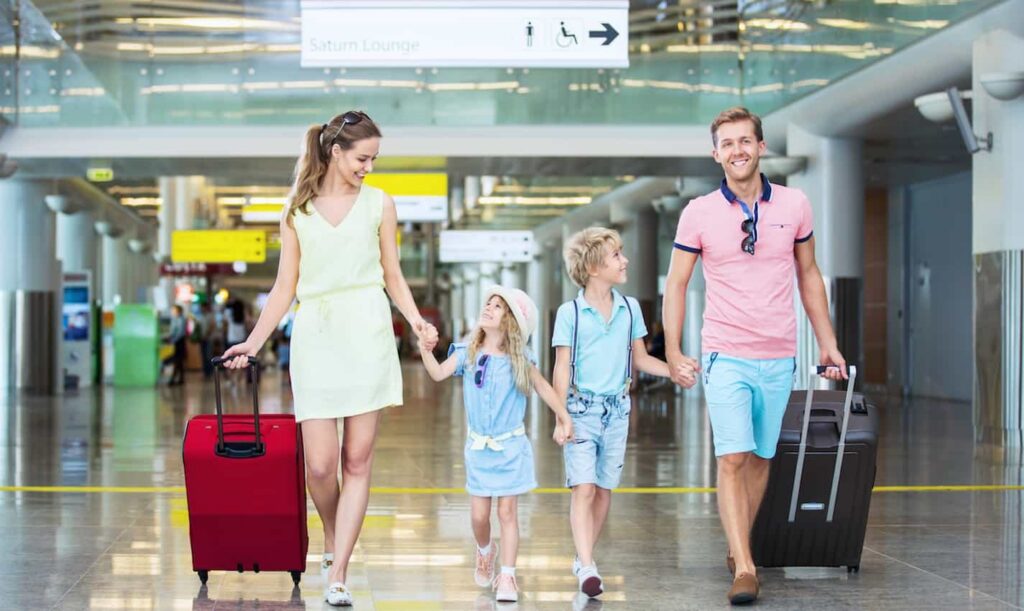
The challenge of how to plan family travel gear on a budget is rarely about finding the cheapest items on a marketplace. Instead, it is an exercise in resource optimization. The primary misunderstanding that compromises this process is the “all-at-once” procurement model, where families attempt to outfit an entire trip at the final hour. This creates a state of logistical panic that favors high-cost, instant-availability solutions over more economical, durable alternatives. Effectively learning how to plan family travel gear on a budget requires the separation of absolute requirements, what is necessary for the safety and movement of the group,p from the “convenience extras” that are often sold as necessities.
Furthermore, success in planning family travel gear on a budget relies on the realization that children’s gear is, by definition, transient. Investing capital into high-end, age-specific equipment that will be outgrown in six months is a failure of long-term planning. The savvy family traveler focuses on modular, adjustable assets that can be repurposed as children age. By viewing the inventory as a dynamic system that evolves, one avoids the trap of repetitive purchasing. Ultimately, how to plan family travel gear on a budget is about identifying the “bridge points,” those rare pieces of equipment that can serve multiple roles, multiple climates, and multiple family members. It is an exercise in cross-functional utility.
The Systemic Evolution of Group Transit Logistics
The evolution of group travel has been heavily influenced by the rise of low-cost carriers and the resultant tightening of luggage constraints. Where families once relied on “more is better,” the contemporary landscape demands “optimized capacity.” The shift toward minimalist, high-density packing has made the gear itself a strategic factor. Today, the most resilient travelers are those who have abandoned the oversized, heavy hardshell luggage of the past in favor of lighter, modular systems that can be easily managed by individual family members, thereby distributing the physical load and the risk of loss or failure.
Conceptual Frameworks for Asset Curation
1. The Utility-Life-Cycle Model
This framework categorizes every item based on its expected duration of utility within the family. High-cost items must demonstrate a utility life cycle that spans at least three years or three distinct developmental stages. Items that fail this test are either rented, borrowed, or purchased at a price point that assumes a single-use obsolescence.
2. The Modular Load Distribution Framework
Instead of assigning one large bag to a parent, this model advocates for a distributed load. Each participant, based on their developmental stage, is responsible for a modular component of the collective gear. This not only reduces the complexity of managing a single, overwhelming piece of luggage but also teaches fiscal and logistical stewardship from a young age.
3. The Redundancy-Optimization Matrix
This matrix categorizes items as “Critical,” “Necessary,” or “Contingency.” Budgetary discipline is enforced by aggressively minimizing the “Contingency” category, which is where most impulsive and unnecessary spending occurs.
Categorizing Equipment Variability and Functional Trade-offs
| Asset Category | Primary Function | Trade-off | Budget Strategy |
| Modular Storage | Internal Organization | Weight vs. Flexibility | Reuse existing internal pouches |
| Transit Apparel | Environmental Defense | Durability vs. Weight | Multi-season layering |
| Load-Carrying Systems | Mobility | Ergonomics vs. Price | Prioritize fit over brand |
| Hydration/Nutrition | Life Support | Bulk vs. Convenience | Repurpose standard containers |
Decision Logic: When determining which category to prioritize, utilize the “Exposure Frequency” test. Items that are used every day of the journey require a higher investment.
Real-World Scenario Analysis
The Multi-Climate Transition
A family is moving from a high-altitude mountain region to a coastal tropical environment.
-
Constraint: Luggage weight and volume are strictly limited.
-
Failure Mode: Purchasing specialized, one-time-use apparel for each climate.
-
Correction: Utilizing a three-layer system that functions in both: a moisture-wicking base, a mid-layer for insulation, and a technical shell for precipitation. This system is purchased once and used for all future travel.
The Developmental Transition
A toddler outgrows their travel stroller within six months of the initial purchase.
-
Failure Mode: Buying a high-end, dedicated travel stroller that serves no other purpose.
-
Correction: Assessing if a standard, high-durability daily stroller can be modified for travel or if a second-hand, proven travel model can be sourced, utilized, and then resold.
Cost Dynamics and Resource Planning
| Cost Element | Variability | Mitigation Strategy |
| Upfront Acquisition | High | Second-hand sourcing/Legacy gear |
| Maintenance/Repair | Low | Pre-trip inspections |
| Indirect (Fees/Loss) | Extreme | Standardized sizing/Weight auditing |
Tactical Tools and Support Systems
-
Compression Cubes: Essential for volume optimization. By reducing the size of soft goods, families can fit more in smaller, non-fee-incurring bags.
-
Shared-Use Inventory: Maintaining a central “family gear library” that is inventoried before and after every trip prevents redundant purchasing.
-
Repair Kits: A simple kit containing adhesive patches, heavy-duty thread, and replacement buckles can turn a terminal gear failure into a minor, temporary inconvenience.
-
Standardized Luggage Sizes: By keeping all bags within the same dimensional limits, the family creates an interchangeable system where the load can be rebalanced easily.
Risk Landscape and Failure Modes
-
The “Specialization Trap”: Buying gear that is so specific it cannot be used at home or on future trips.
-
The “Convenience Premium”: Paying for lightweight or “travel-specific” versions of items when standard, high-durability items function equally well.
-
Compounding Failures: When one piece of low-quality gear fails, it often forces the purchase of high-cost, last-minute replacements at airports or tourist hubs.
Governance and Long-Term Asset Adaptation
Effective management requires a post-trip review cycle. Following each journey, conduct an audit: What was carried but never used? What failed? What was missing? This data is the basis for the next trip’s planning. By adjusting the list based on actual performance rather than anticipation, the family steadily refines their inventory toward a minimalist, highly functional, and cost-effective standard.
Evaluating Performance: Metrics for Stewardship
-
Utilization Rate: What percentage of the packed inventory was used? A goal of 90%+ should be the target.
-
Cost Per Journey: The total cost of the gear divided by the number of trips it has served.
-
Operational Friction: A qualitative measure of how difficult it was to move the gear through transit hubs. High friction indicates a need for reorganization.
Deconstructing Myths and Oversimplifications
-
Myth: “You need a matching luggage set.”
Correction: Matching sets are often heavy and inflexible. A diverse, functional kit is superior. -
Myth: “Everything must be brand new for the trip.”
Correction: The best gear for a trip is gear that has been tested and “broken in” at home. -
Myth: “More gear equals better preparation.”
Correction: More gear equals more logistical complexity and higher risk of loss or failure.
Ethical and Practical Considerations
The consumer pressure to buy “travel-specific” items is an environmental and financial strain. By opting for durable, multi-use, and second-hand gear, families contribute to a more sustainable model of travel. This is not about deprivation; it is about the intelligent selection of tools that serve the family’s needs while respecting the limitations of both their resources and the planet’s resources.
Conclusion
Planning family travel gear is a journey of refinement. It begins with the rejection of the high-consumption model and the adoption of an analytical, stewardship-based approach. By prioritizing multi-functionality, tracking the life cycle of assets, and maintaining a disciplined inventory, families can ensure that their equipment supports their movement rather than constraining it. This is the path to achieving a travel system that is both economically resilient and operationally capable, allowing for the focus to remain where it belongs: on the experience of discovery, the connections formed during the journey, and the memories created as a family.