How to Avoid Passport Water Damage: A Guide to Document Care
The international passport is, in legal and logistical terms, the most significant asset a global traveler possesses. It serves not merely as a travel document, but as an extension of the state’s authority and the individual’s legal identity. Despite its critical role, the passport is a remarkably vulnerable object, composed of cellulose-based paper, synthetic security fibers, and, in modern iterations, delicate embedded RFID chips. The structural integrity of this document is paramount; even minor environmental degradation can render it invalid at a border crossing, leading to immediate denial of entry or prolonged secondary screening.
The threat of liquid contamination is perhaps the most pervasive risk to this document. Whether through atmospheric humidity, direct immersion, or contact with liquid-carrying cargo, water serves as a solvent that initiates the breakdown of paper bonds and threatens the functionality of internal electronic components. Recognizing that passport preservation is a specialized form of archival work is essential for the frequent traveler. It requires a departure from treating the passport as a standard wallet item and, instead, engaging with it as a high-stakes, environmentally sensitive instrument that requires specific custodial protocols.
Ensuring the longevity of this document is an exercise in systemic risk management. It involves mitigating not only the obvious risks, such as accidental spills, but also the subtler, insidious threats like condensation within transit gear, exposure to oceanic air, and the microscopic deterioration caused by poor storage habits. By implementing a layered defense strategy, the traveler ensures that their most vital credential remains as pristine as the day it was issued, regardless of the challenges posed by their itinerary.
Understanding “how to avoid passport water damage.”
When experts discuss how to avoid lost luggage risks, they refer to systemic logistical failures; similarly, professionals exploring how to avoid passport water damage are concerned with the micro-environmental stability of a document that is often subjected to the extremes of human transit. The core challenge is that paper is hygroscopic; it absorbs and releases moisture based on the ambient relative humidity, which triggers structural expansion and contraction. Over time, these microscopic cycles of swelling and shrinking weaken the integrity of the passport’s binding, the readability of its security features, and the stability of the embedded RFID antenna.
The Evolution of Document Security and Material Vulnerability
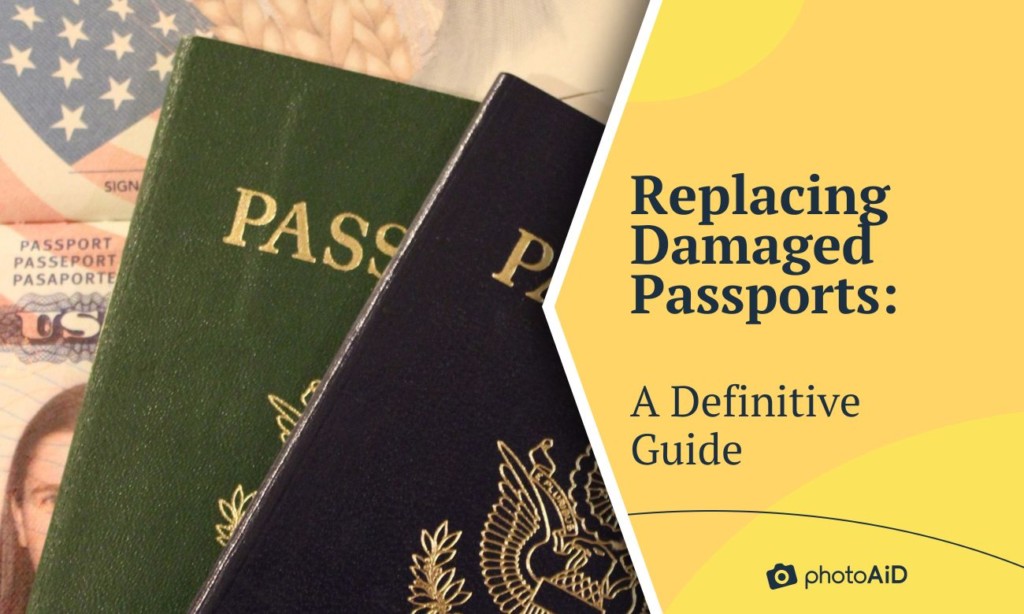
Historically, passports were simple paper booklets, sensitive to staining but largely durable against environmental change. The transition to the “e-Passport” or biometric document has introduced significant new vulnerabilities. The inclusion of an antenna loop and an integrated circuit (IC) has fundamentally changed the physical properties of the document. These components are rigid and brittle compared to the paper pages; they are sensitive to the physical stress caused by the paper warping due to humidity fluctuations.
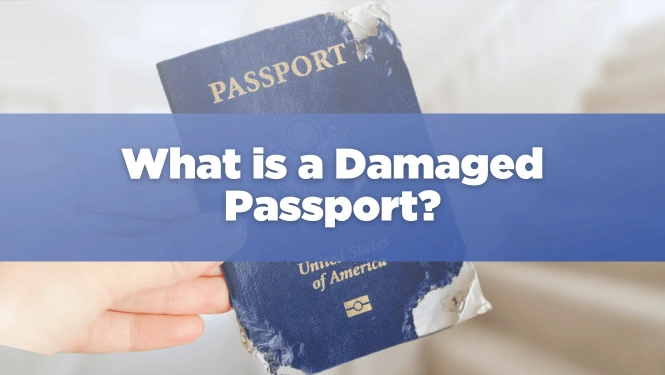
The security inks used in modern passports are also highly reactive. Water-based exposure can lead to the leaching of color, potentially triggering alarms at automated border control gates if the optical machine-readable zone (MRZ) is deemed inconsistent. The systemic evolution of passport security has effectively created a document that is more complex and less tolerant of environmental stress, thereby elevating the necessity for advanced archival-grade care.
Conceptual Frameworks for Archival Document Care
To manage the preservation of this essential document, we must adopt frameworks utilized in professional library and archive sciences.
1. The Hygroscopic Equilibrium Model
This model defines the goal: maintaining the document at a consistent moisture content that aligns with the equilibrium moisture content (EMC) of its materials. Rapid shifts in humidity are the enemy; a passport moved from an air-conditioned cabin (15% RH) to a humid tropical environment (85% RH) experiences immediate physical stress. The goal is to dampen these transitions.
2. The Multi-Layer Defense Framework
This strategy dictates that the document should never be exposed to a single failure point. The defense consists of the passport itself, a semi-permeable secondary layer (like an archival-grade sleeve), and a primary moisture-sealed, rigid container. If one layer is breached, the document remains protected by the secondary and primary layers.
3. The Controlled Air-Exchange Principle
This principle addresses the risk of internal condensation. It posits that a perfectly sealed document is only safe if it is sealed in a moisture-free environment. If the document is sealed while damp, that dampness is trapped. Therefore, all protective measures must either include a desiccant or be designed for controlled, filtered air exchange.
Categorizing Environmental Risk and Exposure Variables
The document is subjected to various threats depending on the nature of the transit.
| Risk Variable | Exposure Type | Severity | Mitigation Strategy |
| Atmospheric Humidity | Constant | Low | Desiccant-based storage |
| Accidental Immersion | Acute | Critical | High-integrity dry bag |
| Cargo Condensation | Cyclical | Moderate | Rigid, insulated container |
| Human Interaction (Spills) | Acute | Moderate | Immediate isolation/protocol |
Decision Logic: The severity of risk is a product of exposure duration and intensity.
Real-World Scenario Analysis
The “Transit Condensation” Event
A traveler stores their passport in an outer pocket of a travel pack that is placed in the cargo hold of an aircraft. The temperature drops to freezing, then rises, causing internal moisture condensation.
-
Failure Mode: Moisture build-up within the pocket, leading to paper dampening.
-
Result: Warping of the paper pages and potential damage to the RFID chip.
-
Second-Order Effect: The passport is deemed “damaged” by a customs agent, requiring a mandatory emergency replacement.
The “Coastal Humidity” Environment
A traveler is stationed in a tropical, coastal location where relative humidity is consistently above 80%.
-
Failure Mode: Gradual moisture uptake by the document.
-
Result: Softening of the internal page bindings, leading to page detachment.
-
Strategy: Storage within an airtight vessel accompanied by activated silica gel, replaced weekly.
Economic and Resource Dynamics of Document Security
The cost of passport preservation is essentially the cost of the protective equipment versus the cost of an emergency passport issuance, which is often several times the price of a standard renewal and involves significant logistical disruption.
| Resource Type | Upfront Cost | Long-term Asset Value |
| Archival-Grade Sleeve | Low | Moderate Protection |
| Rigid, Vacuum-Seal Case | Moderate | High Protection |
| Desiccant Cartridges | Low | Essential for humidity control |
| Professional Case Audit | Zero | High (Strategic awareness) |
For the professional traveler, the “insurance” provided by a rigid, sealed case is a nominal expense compared to the potential financial loss of a missed international business obligation due to a damaged credential.
Tactical Tools and Structural Defenses
-
Rigid, Water-Tight Vessels: Cases with an O-ring seal provide the highest level of protection against acute immersion.
-
Archival Sleeves: Ensure that any secondary layer is non-reactive and archival, preventing chemical leaching onto the passport pages.
-
Indicating Silica Gel: Desiccants that change color when saturated provide a visual trigger for maintenance, which is critical for long-term storage in humid climates.
-
Electronic Humidity Sensors: Small digital hygrometers can be included in a travel kit to provide objective data on the environment the passport is currently inhabiting.
-
Desiccant Regeneration Protocols: Establishing a reliable way to refresh desiccants, such as using a low-heat oven, is essential for travelers on long-term rotations.
Taxonomy of Transit and Stationary Failure Modes
-
Acute Inundation: The document is submerged or directly struck by a significant volume of liquid.
-
Chronic Humidification: The document is exposed to high ambient moisture, leading to internal paper bond degradation.
-
Vapor-Pressure Shock: Rapid shifts between extreme humidity and dry air, resulting in physical structural fatigue.
-
Chemical Contamination: Exposure to liquid cargo, such as cosmetics or beverages, which are not just aqueous but contain solutes that stain or compromise paper chemistry.
Long-Term Governance and Adaptive Protocols
The preservation of a passport is a continuous cycle of auditing and adaptation:
-
Weekly Audit: Assess the state of the primary moisture barrier and the condition of the desiccant.
-
Environmental Assessment: Before entering a new climate zone (e.g., tropical, desert, alpine), adjust the storage strategy to account for expected humidity and temperature ranges.
-
Documentation of Integrity: Regularly inspect the document under bright, side-lighting to check for warping or unusual texture changes.
Evaluating Document Integrity: Leading vs. Lagging Indicators
-
Leading Indicators: A change in the desiccant color; detection of high humidity within the travel kit; localized warping of the passport cover.
-
Lagging Indicators: The failure of the RFID chip to be read at a kiosk; the visual appearance of water stains; the detachment of page seams; the refusal of entry by border officials.
-
Documentation: Maintain a simple log detailing the document’s exposure to significant humidity events or potential risks to provide a clear record of its “health” over its 10-year lifespan.
Deconstructing Myths and Oversimplifications
-
Myth: “My passport is in a ziplock bag, so it’s fine.”
Correction: Standard bags are not designed for archival protection and can degrade over time, leading to chemical transfer or failure to seal. -
Myth: “Passports are waterproof.”
Correction: They are made of cellulose; they are inherently water-sensitive. No modern passport is rated as “waterproof.” -
Myth: “I can just dry it out in the sun if it gets wet.”
Correction: Rapid dehydration will cause catastrophic warping and potentially crack internal electronic components. Controlled, slow drying is the only way to minimize damage.
Ethical and Contextual Considerations
The passport is a document issued by the state, and its condition is, in many jurisdictions, a matter of legal responsibility. Allowing the document to degrade is arguably a failure of that responsibility. Furthermore, as global border controls shift toward biometric authentication, the physical state of the document, including its flatness, the absence of warping, and the integrity of its electronic systems, is becoming increasingly essential to the seamless movement of travelers. Proper care is thus an ethical obligation of the citizen to the state, and a practical necessity for the individual.
Conclusion
The preservation of an international passport is a foundational requirement for the modern traveler. By shifting the perspective of the document from a “wallet item” to an “archival asset,” one can mitigate the risks of environmental degradation through systemic planning, technical defenses, and disciplined maintenance. Avoiding how to avoid passport water damage is not an abstract concept; it is the deliberate application of physics and logistical strategy to prevent the structural failure of a vital credential. Through the use of moisture-sealed barriers, humidity monitoring, and climate-aware storage practices, the traveler ensures that their most essential document remains reliable, functional, and ready for whatever transit challenges the journey may present.