How to Manage Broken Suitcase Wheels: A Definitive Repair & Stewardship Guide
The suitcase is, in its most fundamental state, a piece of industrial equipment tasked with the high-velocity transport of personal assets through environments that are, by design, indifferent to its preservation. The wheel assembly, despite its apparent simplicity, represents the point of maximum mechanical vulnerability. In the high-friction theater of airport terminals, uneven tarmac, and automated sorting carousels, the structural failure of a wheel is not merely a cosmetic annoyance; it is a critical failure of the luggage’s primary function. When a wheel seizes, fractures, or dissociates from the chassis, the entire logistical utility of the bag is compromised, necessitating immediate, decisive action from the traveler.
Managing this failure requires more than the application of temporary fixes; it demands an analytical understanding of the failure mode itself. Was the degradation caused by material fatigue, impact trauma, or perhaps a loss of lubricant in the bearing assembly? Most travelers respond to wheel failure by either discarding the asset or relying on inadequate, makeshift repairs that fail under the slightest load. Neither of these responses is economically or operationally sustainable. True stewardship of travel gear necessitates a structured methodology for identifying, assessing, and rectifying these failures, thereby extending the lifecycle of an investment that would otherwise be rendered useless by a single faulty component.
This analysis deconstructs the anatomy of luggage wheel failure, providing a definitive roadmap for those who view their travel gear as a long-term resource. It transitions the reader away from the reactive, often desperate, measures typically associated with transit-induced equipment failure and toward a systematic, governed approach to repair and replacement. By examining the interplay of materials, mechanical engineering, and logistical constraints, this guide establishes the standard for maintaining the mobility of personal transit equipment in an increasingly demanding global environment.
Understanding “how to manage broken suitcase wheels.”
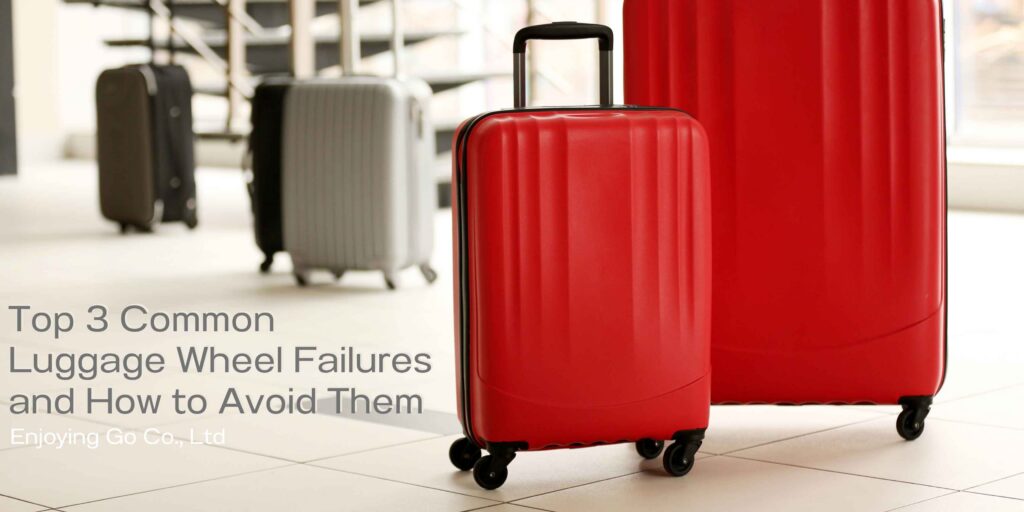
The pursuit of “how to manage broken suitcase wheels” is essentially an exploration into the limits of mechanical reliability in mobile systems. The wheel is a dynamic component subject to rotation, shear forces, and cyclical loading, yet it is often manufactured with materials optimized for cost rather than endurance. When a wheel fails, the user is often in transit, constrained by time and lack of tools. This is where most failures in judgment occur. The typical reaction is to continue dragging the bag, which converts a single-wheel failure into a structural failure of the entire luggage housing.
The primary error in managing this failure is the failure to recognize the nature of the damage. A wheel that stops rotating due to debris is a mechanical block; a wheel that shears off due to impact is a structural breach. These require opposed solutions. When evaluating how to manage broken suitcase wheels, one must distinguish between “field recovery” and “permanent repair.” A field recovery is a tactical, time-sensitive action designed to restore mobility enough to reach a destination; a permanent repair is a structural restoration. The danger lies in mistaking the former for the latter. True mastery involves establishing a triage process that minimizes the propagation of damage while keeping the transit system operational under constraints that are, by their nature, unfavorable.
Deep Contextual Background: The Evolution of Transit Mobility
The integration of wheels into luggage began as an industrial solution to the increasing weight of modern travel. Early designs were rudimentary, characterized by fixed axles and hard-molded plastic or rubber. As the aviation industry scaled, so too did the mechanical requirements for luggage. The shift from two-wheeled “upright” systems to four-wheeled “spinner” assemblies marked a major evolutionary step, allowing for multidirectional movement and reduced strain on the traveler’s wrist.
However, this increase in mechanical complexity came with a proportional increase in the risk of failure. A spinner wheel requires a more complex housing and a more delicate swivel mechanism than a simple fixed wheel. As these systems became the industry standard, the market failed to keep pace with the demand for repairability. Most manufacturers prioritize the integrated housing system, which, while aesthetically seamless, makes the replacement of individual components, such as the wheel, the tire, or the bearing, exceptionally difficult. Understanding how to manage broken suitcase wheels today is, therefore, a task of navigating the discrepancy between modern aesthetic design and the mechanical realities of wear.
Conceptual Frameworks and Mental Models
To effectively approach wheel failure, utilize the following frameworks:
-
The Structural Integrity Threshold: This model dictates that mobility is only valid if it does not compromise the bag’s chassis. If the wheel assembly is torn from the shell, any further dragging will destroy the shell itself. In this case, the suitcase is no longer a wheel-based system; it must be carried.
-
The Mechanical Fuse Concept: View the wheel as a sacrificial component designed to fail before the luggage shell itself. This shifts the perspective from viewing failure as an annoyance to viewing it as a protective mechanism for the more expensive asset (the bag body).
-
The Redundancy/Versatility Framework: In a four-wheel system, the loss of one wheel does not render the bag inoperable, provided the traveler shifts their load to the remaining three wheels and changes their gait to favor stability over speed.
Categories of Wheel Failure and Remediation Logic
| Failure Mode | Root Cause | Remediation Strategy |
| Seized Bearing | Debris/Lubricant loss | Cleaning: high-temp synthetic grease |
| Surface Delamination | Material fatigue/Rough terrain | Replacement of the wheel assembly |
| Sheared Axle/Housing | High-impact trauma | Structural reinforcement; repair kit |
| Tire Separation | Heat/Adhesion failure | Temporary adhesive (not recommended) |
Decision Logic: When determining how to manage broken suitcase wheels, assess the failure’s impact. If the failure is internal (bearing), it may be reversible. If the failure is structural (housing/axle), it is irreversible, and the focus must move to tactical replacement or risk-mitigation measures.
Real-World Scenarios and Failure Modes
Scenario 1: The Terminal Gridlock
The wheel fails inside a large terminal.
-
Decision Point: Do you drag it or carry it?
-
Constraint: The bag is heavily loaded.
-
Result: Dragging causes further housing damage. Carrying is physically impossible. The correct approach is a “three-point tilt,” where the bag is tilted at a specific angle to keep the broken wheel off the ground entirely.
Scenario 2: The International Transit Failure
A wheel shears off mid-journey in a remote location.
-
Constraint: No replacement parts are available.
-
Failure Mode: Attempting a “field repair” with duct tape, which is insufficient for the shear forces involved.
-
Strategic Adjustment: Remove the remaining three wheels to create a flat-bottom, sled-style container, or repurpose a secondary object (like a solid block of wood) to serve as a temporary “ski” that balances the bag height.
Planning, Cost, and Resource Dynamics
The economic cost of managing failures is a function of preparedness.
| Resource | Investment | Expected Impact |
| Universal Replacement Kit | Low | High (Provides redundancy) |
| Professional Repair | High | High (Restores value) |
| Ad-hoc Field Fixes | Very Low | Low (Temporary only) |
When you consider how to manage broken suitcase wheels, the opportunity cost of an unresolved failure—missed flights, ruined clothing, or significant physical strain vastly outweighs the cost of maintaining a basic tool kit for field-level repairs.
Tools, Strategies, and Support Systems
-
Precision Allen/Torx Wrench Set: Many wheel housings are attached with standard, yet recessed, industrial fasteners.
-
High-Temp Synthetic Grease: Ideal for revitalizing seized bearings without attracting unnecessary grit.
-
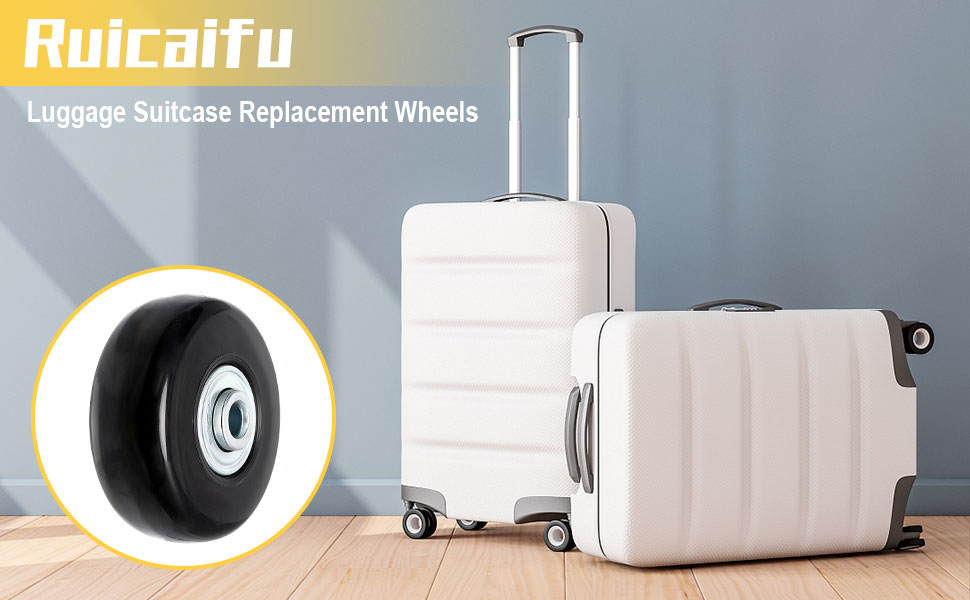
Universal Wheel Replacement Modules: Keeping a generic, compatible replacement wheel can save the entire transit cycle.
-
Adhesive-Backed Industrial Foam: Useful for temporarily stabilizing a damaged wheel housing to prevent it from grinding against the luggage shell.
-
Documentation of Model Specs: A digital file containing the exact wheel diameter and axle diameter for each of your bags, allowing for rapid sourcing of replacements.
The Risk Landscape: Taxonomy of Compounding Failures
The most dangerous failure is the “Cascading Housing Breach.” When a wheel assembly breaks, the mounting points are often stressed. If the traveler continues to move the bag, the stress vectors will propagate through the polycarbonate or ballistic shell, turning a $20 wheel repair into a $300 luggage replacement. Managing this failure requires an immediate cessation of the wheel’s intended use the moment structural damage is detected.
Governance: Long-Term Maintenance and System Evolution
To ensure wheel longevity, the steward must implement a cyclical review:
-
Pre-Departure Inspection: A 60-second spin test for each wheel. If resistance is detected, clean and lubricate the bearing.
-
The Debris Audit: Post-transit, inspect the wheel well for trapped hair, gravel, or fiber.
-
The Replacement Trigger: Once a wheel’s tire surface shows signs of flat-spotting or significant delamination, it has reached the end of its structural life and must be replaced before the next transit event.
Measurement and Evaluation Protocols
-
Leading Indicators: The acoustic profile of the wheel (a rattling sound often precedes bearing failure); increased rolling resistance.
-
Lagging Indicators: Visible fractures in the axle housing; irregular wheel tracking.
-
Documentation Example: Maintain a “Mobility Log” for each bag: (Transit Route) | (Surface Condition) | (Post-Trip Wheel Condition). This helps identify if specific transit paths or bags are prone to consistent failure.
Refuting Common Misconceptions
-
“Wheels are universal.” They are not. Axle diameters and housing configurations vary wildly. Compatibility must be verified by measurement, not by visual approximation.
-
“Duct tape is a repair.” Duct tape is a containment method. It has zero structural capacity against the shear forces of transit.
-
“Warranty covers this.” Most airline and manufacturer warranties exclude wheel damage as “normal wear and tear.”
-
“If it’s stuck, push harder.” This is the direct cause of catastrophic housing failure.
-
“There’s nothing I can do until I get home.” Field-level containment of damage is always possible through tactical load redistribution.
Conclusion
The management of mechanical failure is an exercise in reality-based problem solving. By understanding that failure is an expected outcome of the transit environment, the traveler gains the ability to approach it without panic. Knowing how to manage broken suitcase wheels is a skill that shifts the traveler from a passive victim of logistical chaos to an active steward of their own equipment. It requires recognizing the mechanical limitations of one’s gear, intervening at the first sign of structural distress, and maintaining the preparedness to act when the unforeseen occurs. Through this disciplined, analytical approach, the durability of one’s equipment is no longer left to chance but is instead governed by a framework of proactive care and strategic adaptation.