
Best Winter Travel Coats United States: A Technical Guide for Travelers
The selection of a winter travel coat is rarely a matter of mere aesthetic preference; it is an exercise in atmospheric mitigation. When traversing the diverse climatic zones of the United States from the arid, high-altitude cold of the Rockies to the damp, biting chill of the Northeast corridor, the coat functions as a mobile life-support system. A failure to calibrate this system to the specific environment does not simply result in discomfort; it compromises the traveler’s ability to engage with their destination. The prevailing consumerist impulse to purchase a single, “all-purpose” winter coat is, in many ways, an exercise in optimism that rarely survives contact with extreme weather realities.
True operational readiness requires an analytical approach to thermal management. The most effective travel systems rely on modularity, where the garment is viewed as one component of a broader, tiered configuration. By focusing on the structural properties of insulation, the mechanics of moisture management, and the limitations of various shell materials, the traveler can construct a kit that remains performative across widely divergent environmental contexts. This is not about the accumulation of gear; it is about the intelligent curation of versatile assets that resolve the friction between internal physiology and external meteorology.
Understanding “best winter travel coats in the United States.”
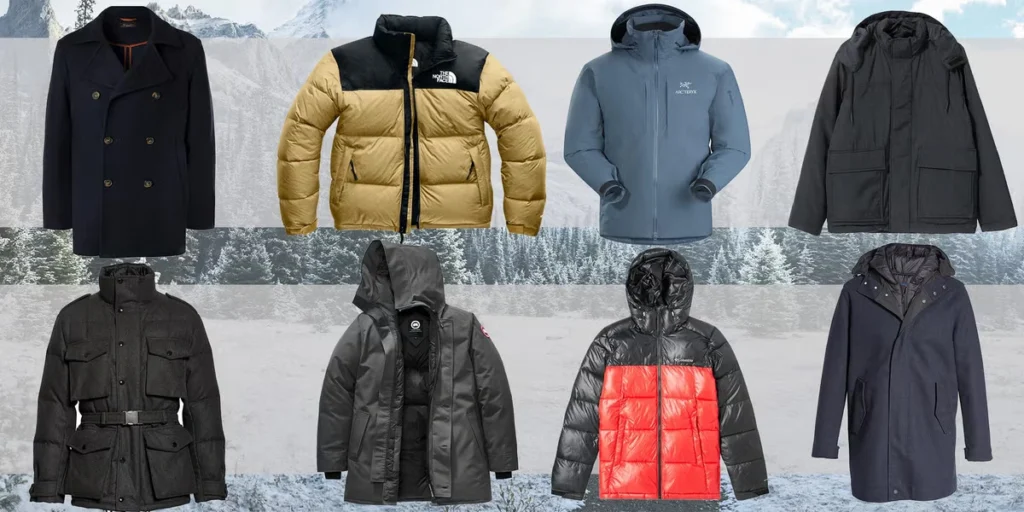
The search for the best winter travel coats united states is frequently complicated by the lack of a standardized metric for warmth or environmental resilience. A coat categorized as a “heavyweight parka” in a mild coastal climate may be fundamentally insufficient for the high-plains winters of the Midwest. The most significant misunderstanding in this space is the assumption of universality; there is no single garment that performs with equal efficacy across the humidity gradients and wind-chill factors of the North American continent. Recognizing the best winter travel coats united states involves an analytical assessment of one’s specific travel itinerary and the physiological variability of the individual.
The Systemic Evolution of Technical Outerwear
The history of winter outerwear in the United States reflects a broader transition in industrial design. We have moved from the era of heavy, monolithic materials such as thick wool and heavy wax-treated canvases toward a modern paradigm defined by the “shell-and-insulation” dichotomy. The introduction of synthetic alternatives to natural down, such as high-loft polyester clusters, has fundamentally altered the performance ceiling for garments used in wet-cold environments. Today, the integration of mapping technology where insulation is strategically placed based on the body’s heat-loss map represents the apex of this evolution, turning the jacket from a mere container into a targeted thermal-regulation tool.
Conceptual Frameworks for Thermal Management
1. The Loft-Density Model
This framework categorizes insulation by its ability to trap air. High-loft insulation (down) provides the best warmth-to-weight ratio but suffers in high-humidity environments. High-density synthetic insulation provides a lower warmth-to-weight ratio but maintains structural integrity when damp.
2. The Vapor-Transmission Gradient
This model views the coat as a filter for moisture. The primary threat to thermal stability is not external precipitation but internal sweat. A garment’s success is measured by its “breathability” (Moisture Vapor Transmission Rate, or MVTR), its ability to move water vapor away from the skin before it condenses.
3. The Shelter-vs-Performance Continuum
This framework divides outerwear into “Stationary” (high-insulation, low-breathability, windproof) and “Active” (low-insulation, high-breathability, water-resistant). The traveler must choose where on this continuum their activities reside.
Categorizing Insulation and Shell Variability
| Material Category | Primary Utility | Performance Trade-off |
| High-Fill Natural Down | Dry, extreme cold | Fails in moisture/sweat |
| Synthetic High-Loft | Damp, variable cold | Lower compressibility |
| Hard-Shell Membrane | Maximum weather defense | Limited breathability |
| Hybrid Soft-Shell | High-output activity | Minimal storm defense |
Decision Logic: In environments characterized by high humidity (e.g., the Pacific Northwest), prioritize synthetic insulation combined with a breathable water-resistant shell. In environments of dry, sub-zero intensity (e.g., the Upper Midwest or Rockies), natural high-fill down combined with a wind-blocking membrane is the superior configuration.
Real-World Scenario Analysis
The Urban-to-Alpine Transition
Travel from a mild, damp city to a high-elevation ski resort.
-
Constraint: Luggage space is limited; versatility is mandatory.
-
Failure Mode: Attempting to wear a single, massive parka during transit, leading to overheating on planes/trains.
-
Correction: Utilizing a three-layer system (base, insulating mid-layer, protective shell) that can be adjusted dynamically.
The Windy Plains Exposure
Extended outdoor time in high-wind conditions in the Great Plains.
-
Failure Mode: Reliance on “puffy” down jackets that lack wind-blocking membranes, allowing cold air to penetrate the insulation.
-
Correction: Pairing the down insulation with a non-porous, wind-blocking “shell” layer that neutralizes wind chill.
Economic and Resource Dynamics
| Investment Tier | Typical Focus | Economic Strategy |
| Modular/Systemic | Component-based layering | High initial outlay, multi-decade life |
| Monolithic/Parka | All-in-one protection | Mid-range, limited climate range |
| Seasonal/Fashion | Brand/Aesthetics | Low cost, high replacement rate |
The most sustainable economic model is the “Modular/Systemic” approach. While the initial acquisition cost for a professional-grade shell and separate mid-layer is higher, the total cost of ownership is significantly lower due to the ability to repair, refresh, and adapt the components over time.
Tactical Tools and Support Systems
-
DWR (Durable Water Repellent) Maintenance: Periodic re-application of DWR treatments is essential to maintain the shell’s breathability; when the outer fabric wets out, the entire system fails.
-
Compression Caching: Use specialized compression bags to store insulation layers, maintaining their loft and volume-efficiency during transit.
-
Moisture-Management Baselines: Always include a moisture-wicking synthetic or merino base layer, as cotton is a significant thermal liability in winter.
-
Hardware Verification: Ensure that zippers and drawstrings—the primary mechanical failure points—are of industrial-grade quality.
Risk Landscape and Failure Modes
-
The “Sweat-Chill” Cycle: Over-insulating leads to perspiration, which freezes when activity stops, leading to rapid heat loss.
-
Membrane Clogging: Failure to keep the shell clean results in salt and dirt clogging the pores of the waterproof membrane, killing breathability.
-
The “Compression Death”: Storing down garments in overly compressed states for long durations permanently degrades the loft, destroying the insulation’s ability to trap air.
Governance and Long-Term Adaptation
Treat outerwear as a managed asset registry:
-
Annual Cleaning: Use technical, non-detergent cleaners to remove oils and salts that degrade insulation performance.
-
Structural Audit: Check all elasticated cuffs, hoods, and bottom hems for loss of tension.
-
Layering Rotation: Adjust the mid-layer weights based on the climate of the upcoming trip, rather than carrying a single, fixed-insulation jacket.
Evaluating Performance: Metrics for Stewardship
-
Loft Retention: Does the insulation return to its original volume after storage?
-
Hydrostatic Head: Does water bead on the shell fabric, or does it soak in?
-
Vapor Escape Rate: Do you feel clammy after thirty minutes of active transit? If yes, the shell or layering system is misconfigured.
Deconstructing Myths and Oversimplifications
-
Myth: “Waterproof means never getting wet.”
Correction: Most waterproof membranes prioritize barrier protection at the expense of breathability. True winter comfort requires a focus on balancing both. -
Myth: “Heavier is warmer.”
Correction: Warmth is a function of trapped air (loft). A lighter, higher-loft jacket is often warmer than a heavy, low-loft coat. -
Myth: “You need to wash it as little as possible.”
Correction: Regular, correct washing is necessary to restore the loft of down and the breathability of technical membranes.
Ethical and Practical Considerations
The environmental impact of outdoor apparel is significant, particularly regarding the use of “forever chemicals” (PFAS) in DWR treatments. Discerning travelers now seek out brands that are transparent about their chemical usage and supply chains. By supporting companies that prioritize longevity and ethical sourcing, the traveler contributes to a more sustainable model of winter transit.
Conclusion
Mastering the use of winter travel coats is a technical discipline that favors the prepared. By rejecting the search for an all-encompassing “perfect coat” and instead adopting a system of modular, climate-appropriate components, the traveler gains the ability to navigate the varying American winter with precision and safety. The goal is to move through the environment unimpeded by the elements, maintaining a stable internal microclimate regardless of the external conditions. This is the hallmark of the professional traveler: an ability to curate the right tools, manage their performance through the rigors of transit, and ensure that their equipment serves as an enabler of discovery rather than a point of failure.