How to Avoid Luggage Scratches: A Technical Guide to Surface Maintenance
The modern transit environment operates as a high-entropy theater. For the conscientious traveler, the suitcase is not merely a container; it is a sophisticated piece of equipment designed to safeguard assets through disparate micro-climates, erratic mechanical handling, and the crushing pressures of high-volume logistics. The aesthetic degradation of luggage, specifically the accumulation of surface abrasions, is often treated as an inevitable tax of travel. Yet this perspective overlooks the structural and material factors that determine why some gear remains resilient while others succumb to the rigors of the baggage carousel.
Preserving the exterior finish of a travel bag necessitates a shift in focus from reactive cleaning to proactive mitigation. Scratches are not simply “bad luck” or the result of negligence by airline personnel; they are the physical manifestation of kinetic energy transfer. When two surfaces of varying hardness interact under load, the softer material will yield. To master the art of maintaining travel gear, one must deconstruct these interactions and recognize that the environment is constant, but the variables of material selection, protective configuration, and handling habits remain within the traveler’s control.
This analysis seeks to move beyond the superficial advice typically found in consumer guides. By examining the metallurgical and polymer-based realities of luggage construction and the systemic pressures of the international transit supply chain, this document establishes a definitive framework for long-term equipment stewardship. It is intended for readers who view their luggage as a durable asset and seek a systematic approach to minimizing cosmetic and structural wear throughout the product’s full lifecycle.
Understanding how to avoid luggage scratches
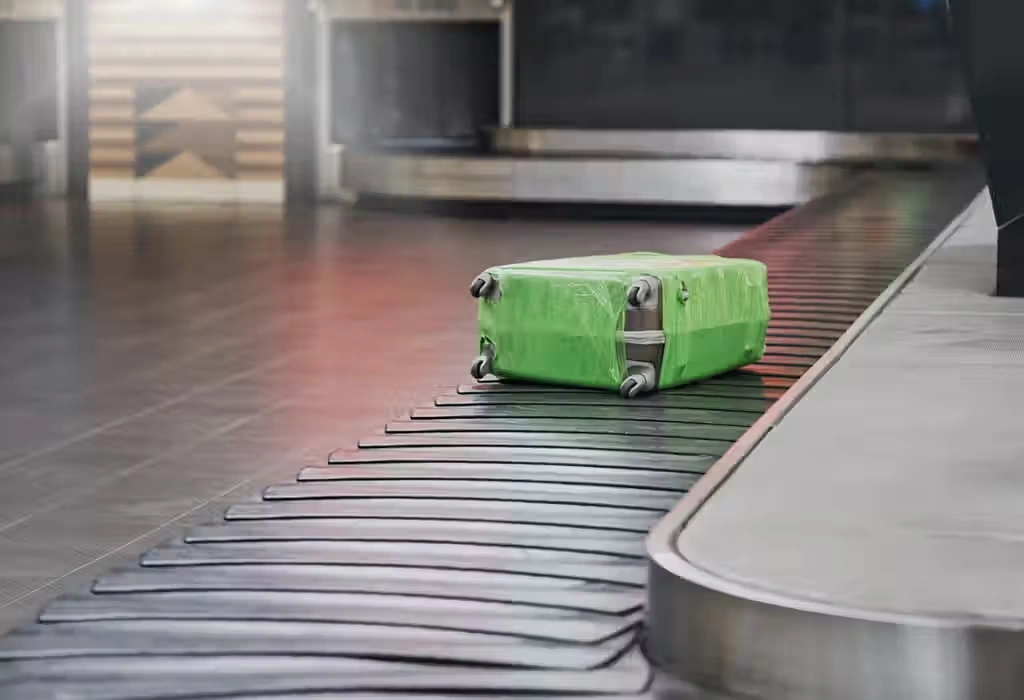
The pursuit of “how to avoid luggage scratches” is fundamentally a quest for entropy reduction in a high-friction ecosystem. The central challenge lies in the sheer lack of predictability regarding what a suitcase will encounter. From the jagged edges of automated aluminum sorters to the abrasive grit present on tarmac surfaces, the suitcase exists in a state of constant, low-level assault. A failure to appreciate the scale of this friction leads to the most common error in preservation strategy: the reliance on singular, all-encompassing solutions, such as simple nylon covers.
To grasp the complexity here, one must differentiate between surface marring and structural failure. A scratch on a polycarbonate shell is a localized displacement of material; it is cosmetic. A scratch that deepens into a fissure is a structural breach. Most advice on how to avoid luggage scratches focuses on the aesthetic, yet the true editorial concern is the maintenance of the bag’s integrity. When we speak of avoidance, we are really discussing the management of contact energy. Every scratch is a trace of a specific event where force was applied to the shell. By controlling the movement of the bag—limiting drag, reducing exposure to high-abrasion zones, and selecting materials that diffuse rather than concentrate energy—the traveler effectively changes the probability distribution of these events. The goal is not to achieve an impossible state of zero contact, but to reduce the velocity and frequency of that contact until it falls below the damage threshold of the material.
Deep Contextual Background: The Evolution of Transit Stress
Historically, luggage was a matter of leather and wood materials that aged through patina, where a scratch was perceived as a marker of character. The advent of modern travel, marked by the rapid scale-up of aviation in the mid-20th century, necessitated a shift toward materials that could withstand the industrialization of handling. The introduction of high-impact plastics and aerospace-grade alloys changed the equation entirely. Today, a scratch is no longer a “patina”; it is a sign of material degradation in a system where speed is prioritized over the delicate handling of individual assets.
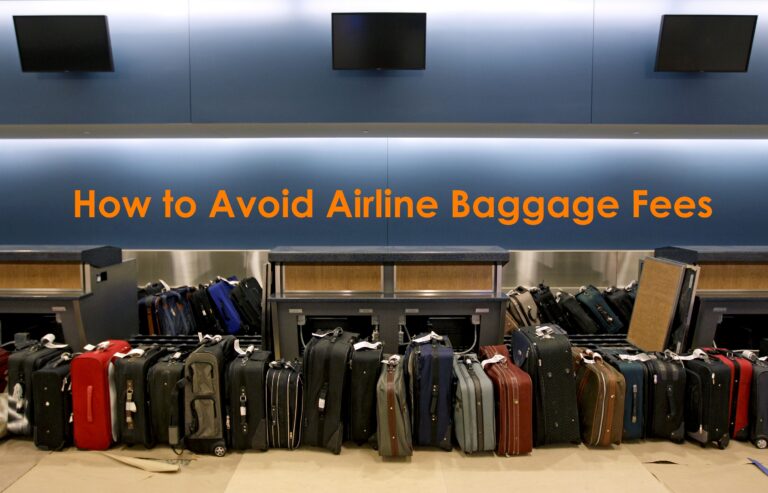
The systemic shift toward automated sortation systems has introduced a new class of threats. These systems rely on high-speed belts, diverters, and friction-based rollers that act as continuous grinding surfaces. A bag that traverses an international hub is, in effect, being subjected to a series of mechanical tests. Consequently, the modern traveler must account for the reality that the primary source of luggage damage is no longer the human handler, but the very infrastructure designed to facilitate global movement. Learning how to avoid luggage scratches requires an acknowledgement of this transition; we are no longer protecting against human error alone, but against the systemic attrition of industrial logistics.
Conceptual Frameworks and Mental Models
To manage these variables, consider the following frameworks:
-
The Energy-Dissipation Model: View your suitcase as a system meant to dissipate energy. A rigid, brittle shell concentrates energy at the point of impact, leading to deep, permanent gouges. A flexible shell, or one with a protective, sacrificial layer (like a thick synthetic cover), dissipates that energy across a wider surface area.
-
The Hardness-Differential Law: Scratches occur when the impacting surface (e.g., the steel edge of a baggage cart) is significantly harder than the suitcase surface (e.g., polycarbonate). To avoid damage, you must create a buffer that introduces a middle-layer material—a “soft” zone—that acts as a mechanical fuse.
-
The Proximity-to-Source Principle: The most frequent damage occurs at the bottom 15% of the bag and the leading edges. Recognizing this allows for concentrated reinforcement, such as specialized corner guards rather than attempting to shield the entire piece of luggage from every conceivable angle of contact.
Material Categorization and Trade-Off Logic
| Material Class | Primary Scratch Vulnerability | Mitigation Strategy |
| Polycarbonate | Surface-level micro-marring | Polymer wax coating; avoid glossy finishes |
| Aluminum | Anodized layer removal | Clear protective film (bra); embrace patina |
| Ballistic Nylon | Fiber shredding/abrasion | Avoid dragging; use bottom-skid protectors |
| Polypropylene | Surface deformation/gouging | Strategic patching; ignore minor marks |
| Leather | Deep puncture/gouging | Routine conditioning; professional re-dyeing |
Decision Logic: When selecting gear, analyze the anticipated transit environment. If the traveler predominantly utilizes direct-to-destination routes, an aluminum or high-gloss polycarbonate bag is viable. If the travel involves multiple connections through major hubs with complex automated systems, a matte-finish hardside or a ballistic nylon option becomes the superior choice for mitigating visible wear. Mastery regarding how to avoid luggage scratches begins with this pre-purchase decision.
Detailed Real-World Transit Scenarios
The Automated Hub Transfer
When navigating large international hubs, the luggage will traverse miles of internal conveyor belts. The highest risk is the “diverter arm”—the mechanism that redirects bags. These arms are often steel.
Mitigation: A tight-fitting, high-denier fabric cover is essential here. It acts as a slip-sheet, allowing the diverter to contact the cover rather than the bag itself.
The Tarmac Exposure
In smaller airports, bags are often loaded via belt loaders or manual dollies on tarmac surfaces. The grit and concrete are the primary enemies.
Mitigation: Ensure the luggage wheels are large and rubberized. Small, hard plastic wheels pick up grit and trap it between the suitcase and the ground; larger wheels raise the bag higher, keeping the shell away from the abrasive surface.
Overhead Bin Crowding
When traveling with carry-on only, the “scratch” often comes from the metal zippers of adjacent bags.
Mitigation: Packing a secondary, soft-shell “garment bag” or a thin wrap to place over the suitcase when stowed is a highly effective, low-cost strategy.
The Last-Mile Drag
Dragging a suitcase through a parking lot or over uneven brick streets is the most common cause of corner scuffing.
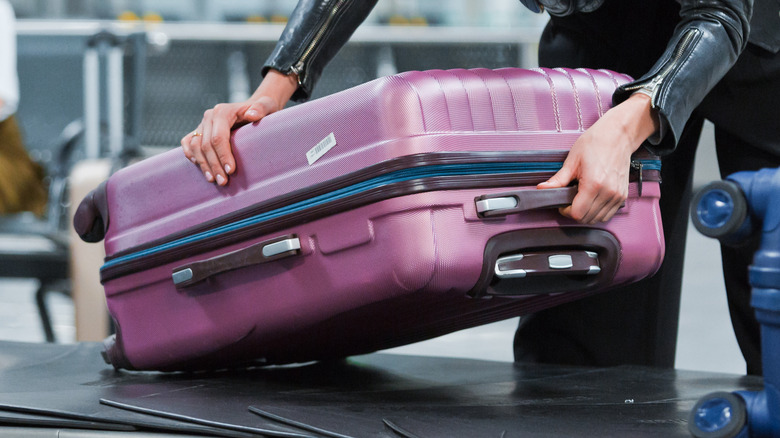
Mitigation: The “Vertical Carry” rule. Always maneuver the bag in an upright, four-wheel orientation. The moment the bag is tilted to two wheels, the bottom edge becomes a sacrificial plow, inviting scratches.
Economic Dynamics of Asset Preservation
| Cost Element | Relative Expense | Expected Impact on Longevity |
| Sacrificial Wraps | Low | High (Protects finish) |
| Surface Sealants | Low-Medium | Medium (Hydrophobic/Ease of cleaning) |
| Professional Refinishing | High | High (Restores value) |
| Upgraded Hardware | High | Very High (Prevents secondary damage) |
The economic cost of learning how to avoid luggage scratches is often dwarfed by the cost of replacing or repairing high-end gear. Investing in protective accessories is essentially an insurance policy that pays dividends in the form of extended asset utility.
Tools, Strategies, and Support Systems
-
Automotive-Grade Polymer Sealants: These are superior to household waxes. They fill microscopic pits in the polycarbonate shell, creating a slick surface that allows abrasive objects to glide over rather than bite into the material.
-
Corner Guard Modules: Adhesive-backed silicone or high-density plastic guards protect the most vulnerable points of the suitcase.
-
Low-Friction Luggage Tags: Often overlooked, hard plastic tags can act as a pendulum, swinging against the shell and causing linear scratches. Soft, leather, or nylon tags are preferable.
-
Telescoping Handle Buffers: Silicone sleeves prevent the handle mechanism from vibrating against the shell during transit.
-
Strategic Packing Distribution: Heavier items should be at the base to ensure the bag remains stable and does not tilt or drag.
The Taxonomy of Risk and Failure Modes
The primary failure mode is “Compounding Damage.” A small scratch on a polycarbonate bag creates a jagged edge, which then catches on other surfaces, turning a minor mark into a long, deep gouge. This feedback loop is the death of aesthetic integrity. Understanding that one must intervene at the first sign of damage by smoothing the edges of a scratch or applying a protective barrier is vital. Another significant risk is the “Internal Friction” failure, where the contents of the bag (e.g., metal buckles or chargers) rub against the interior, causing stress that eventually reflects on the exterior shell. Using internal organizers mitigates this internal-to-external stress transfer.
Governance, Maintenance, and Long-Term Adaptation
Preservation is a cycle. A rigorous editorial approach to this maintenance includes:
-
Post-Trip Audit: After every international flight, inspect the shell for “impact points.”
-
Surface Resurfacing: If micro-scratches are present, use a fine-grit plastic polish to restore the sheen and seal the surface.
-
Adjustment Triggers: If a specific piece of luggage repeatedly shows damage in the same location, it indicates a flaw in the user’s handling technique, perhaps a tendency to drag, or a failure to properly secure the bag during storage.
Measurement, Tracking, and Evaluation
-
Leading Indicators: The presence of grit on the exterior shell (indicates imminent scratching).
-
Lagging Indicators: The accumulation of linear gouges (indicates failures in loading/handling protocols).
-
Documentation: Maintain a simple log for high-value gear. Note the route, the handling method (checked vs. carry-on), and the condition post-transit. This data allows the traveler to refine their “transit signature,e” the specific set of choices that leads to the best outcome for their equipment.
Refuting Common Misconceptions
-
“Hardside is always better.” Hardside is better for impact protection, but it is often less durable against cosmetic scuffs than a high-quality softside bag.
-
“Scratches are unavoidable.” While total avoidance is impossible, a 60–80% reduction in visible damage is achievable through better handling.
-
“Wraps overheat the luggage.” A well-ventilated wrap, used only during transit, poses no risk to the shell or the contents.
-
“Stickers hide damage.” Stickers are a temporary fix that often peel, creating an even more chaotic visual profile than the original scratch.
-
“Expensive bags are scratch-proof.” Price is often a proxy for internal mechanical quality, not external scratch-resistance.
-
“Plastic film is the ultimate solution.” Professional-grade vehicle wraps are effective, but they require precise application and are not designed for the extreme mechanical abuse of a conveyor belt.
Conclusion
The preservation of luggage is, at its core, a reflection of the traveler’s relationship with their tools. By treating the suitcase as an asset that requires active governance rather than passive ownership, one can significantly alter the trajectory of its physical condition. The methods discussed here, from understanding the mechanics of energy dissipation to the granular application of protective barriers, provide a rigorous framework for navigating the hostile environment of modern transit. Adaptability is the final requirement; one must recognize that every transit route is unique, and the most successful traveler is the one who monitors the condition of their gear, learns from the patterns of wear, and adjusts their strategy accordingly.